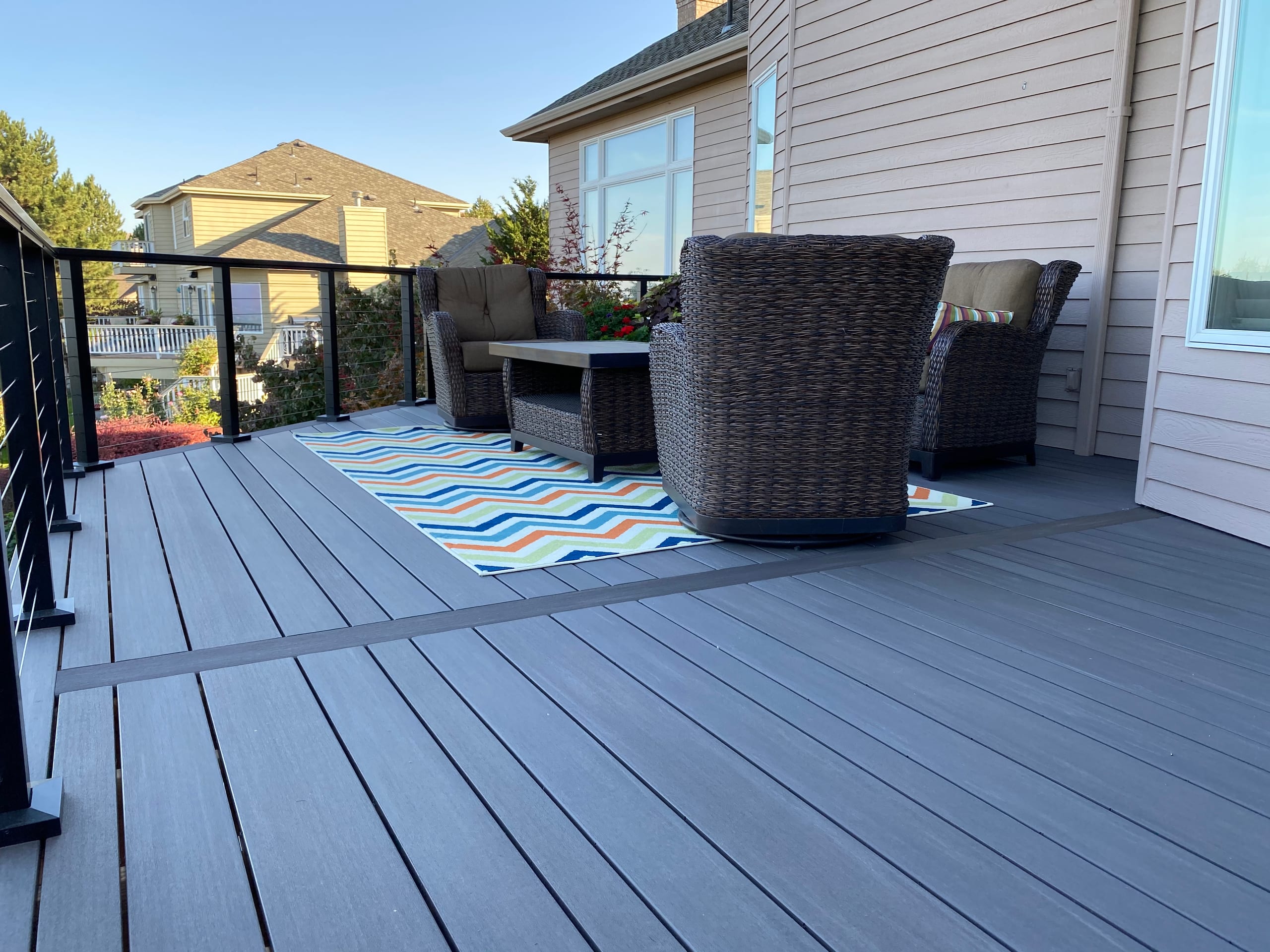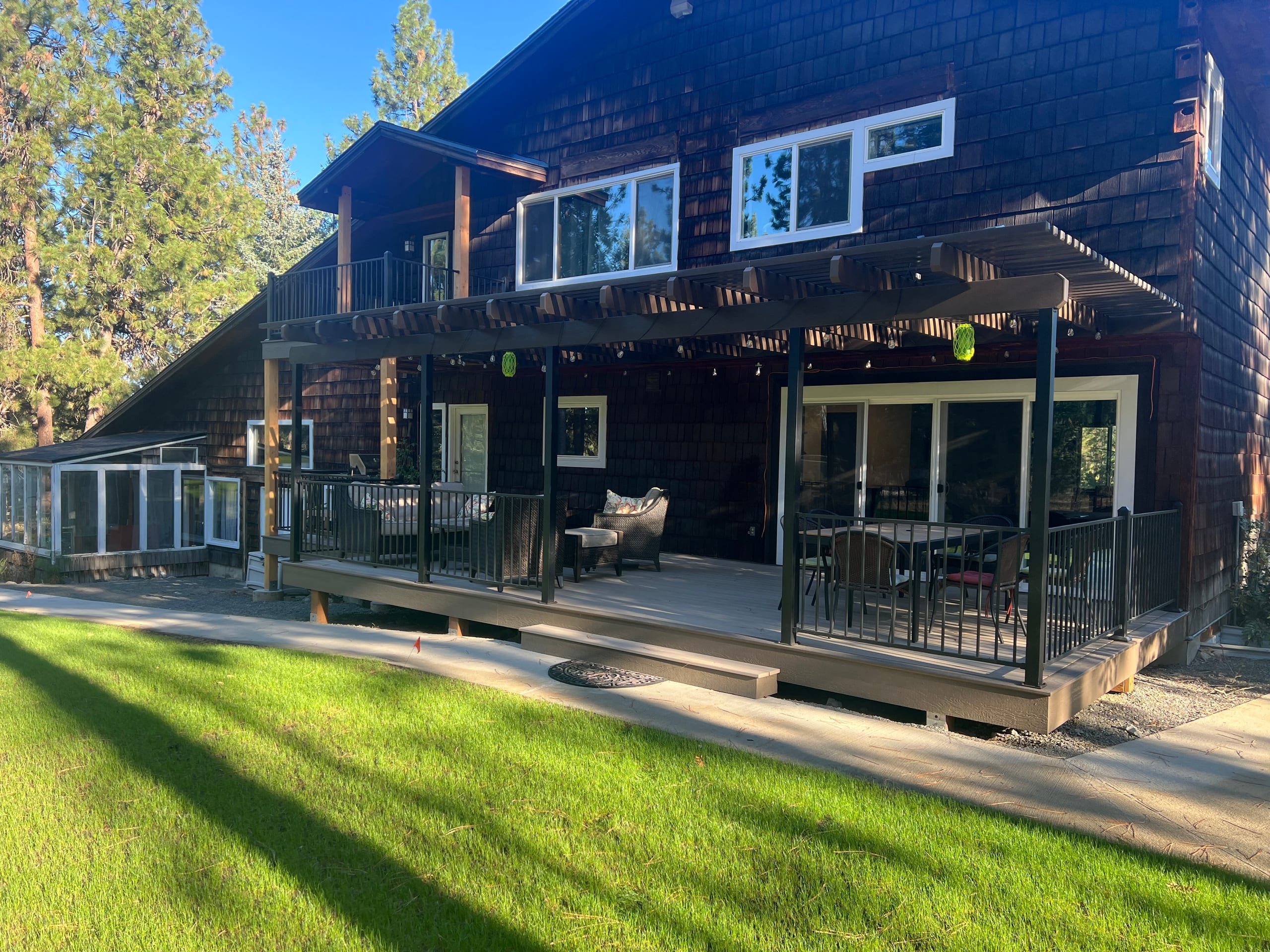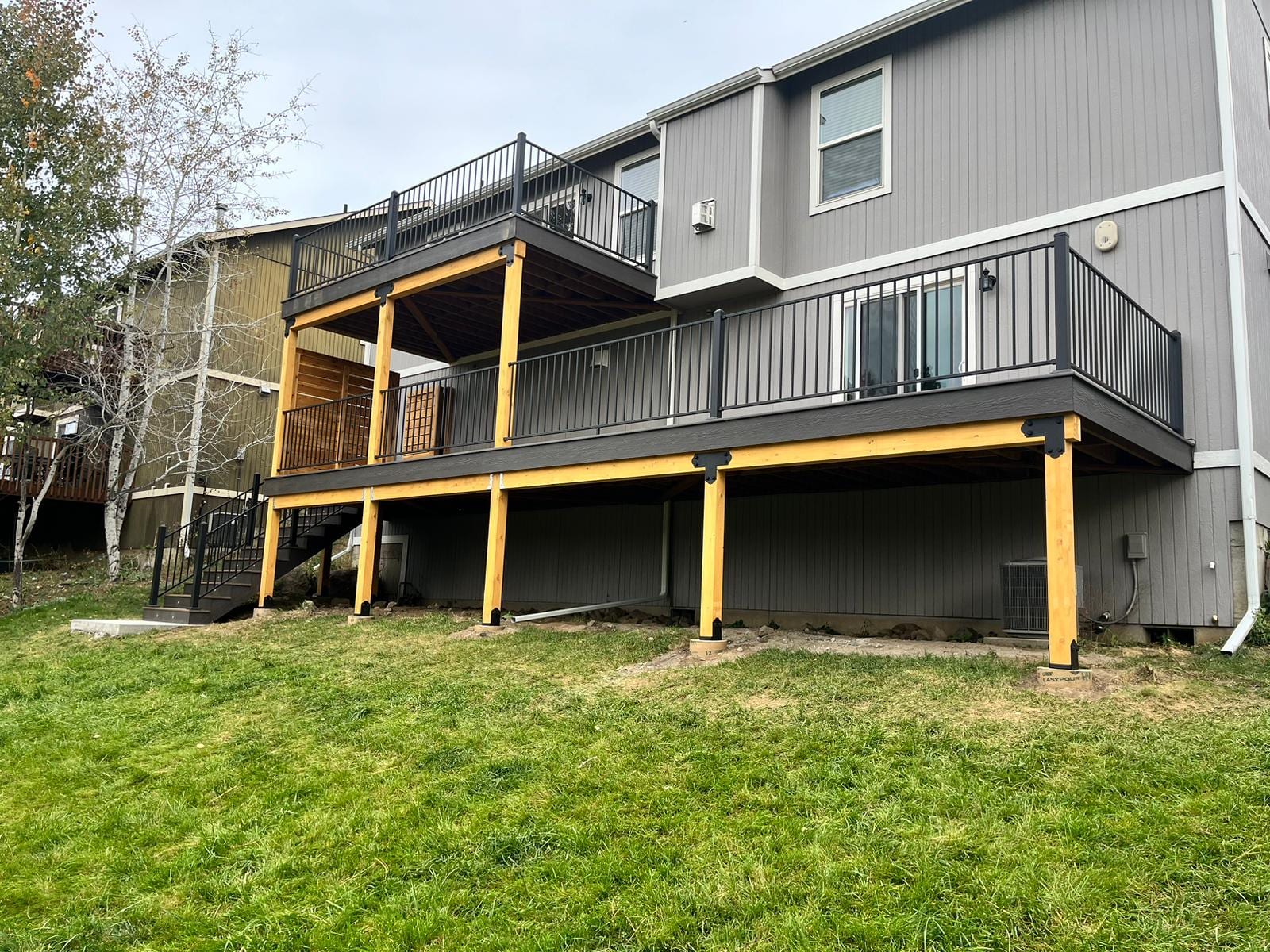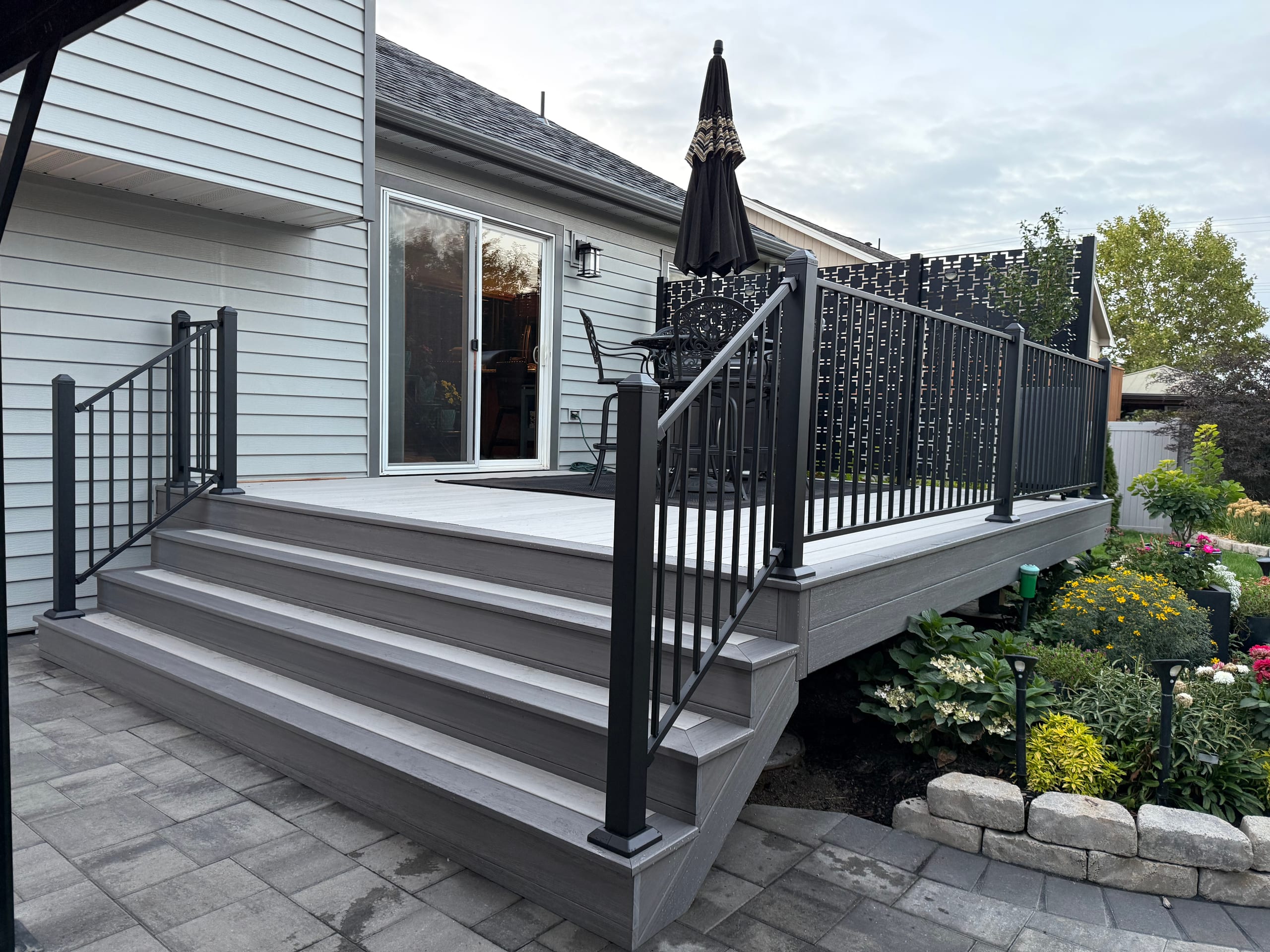
Gray composite deck with wide steps, black metal railing with decorative privacy panel and umbrella

Decking & Railing

Privacy Screen Installation in Idaho Falls, ID

Dynamic Decks Idaho Falls installs outdoor privacy screens for decks, patios, and gathering areas in Idaho Falls. We plan cedar, vinyl, or aluminum panels around the view you want to block while keeping a screen project distinct from a solid privacy wall.

Call (208) 274-3260 to discuss your outdoor space.

Request a Free Estimate

No obligation. We'll get back to you fast.

Photos of the space help us picture the site before we visit.

No files selected

You can upload up to 10 images (10 MB max. per file; larger photos are made smaller for you). Accepted file types: JPG/JPEG, PNG, WebP, AVIF, HEIC, and HEIF.

Required fields are marked with an asterisk. We use these details to start the right conversation about your project.

Plan Privacy Screen Installation Around the View

You may need privacy from one neighbor's window, not a barrier around the entire deck. A panel beside the seats can interrupt that line of sight and leave the rest of the yard open.

Show us where you sit and which view bothers you. We also look back from the house and yard, because a screen that fixes one angle can close off another. Once we know the view to change, we can talk about position, height, and material.

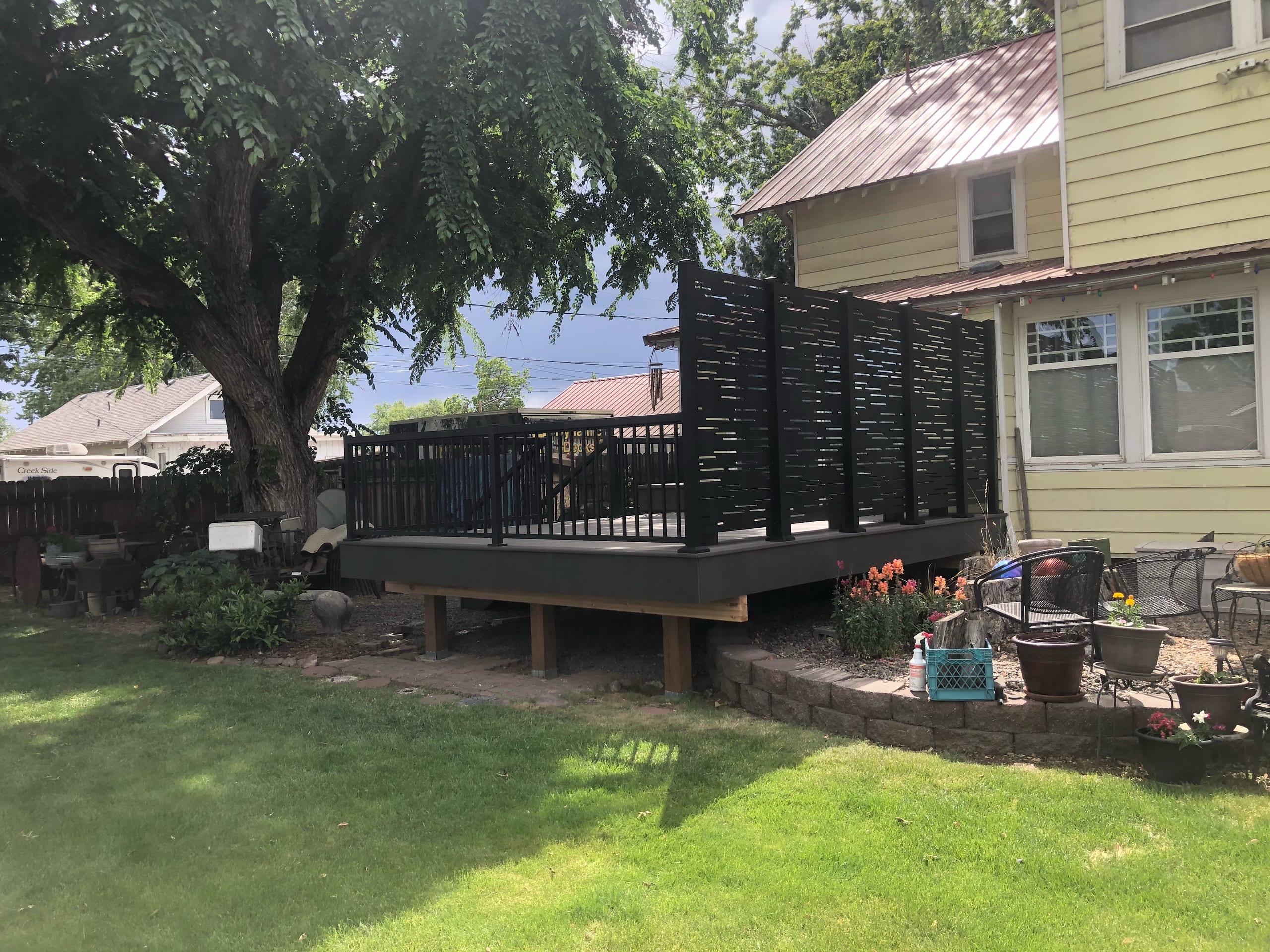
Raised gray composite deck with black picket railing and tall black privacy screen beside yellow house and lawn

What Our Privacy Screen Installation Service Includes

We install privacy panels, arrangements of screening elements, and standalone screens. Cedar, vinyl, and aluminum are material options, with the pattern and support chosen for the proposed spot.

A solid privacy wall is a different project. We can discuss that separately if you need full coverage, but we will not price a wall as if it were a small screen or assume every panel closes off the same amount of view.

Choose the Right Outdoor Privacy Screen Coverage

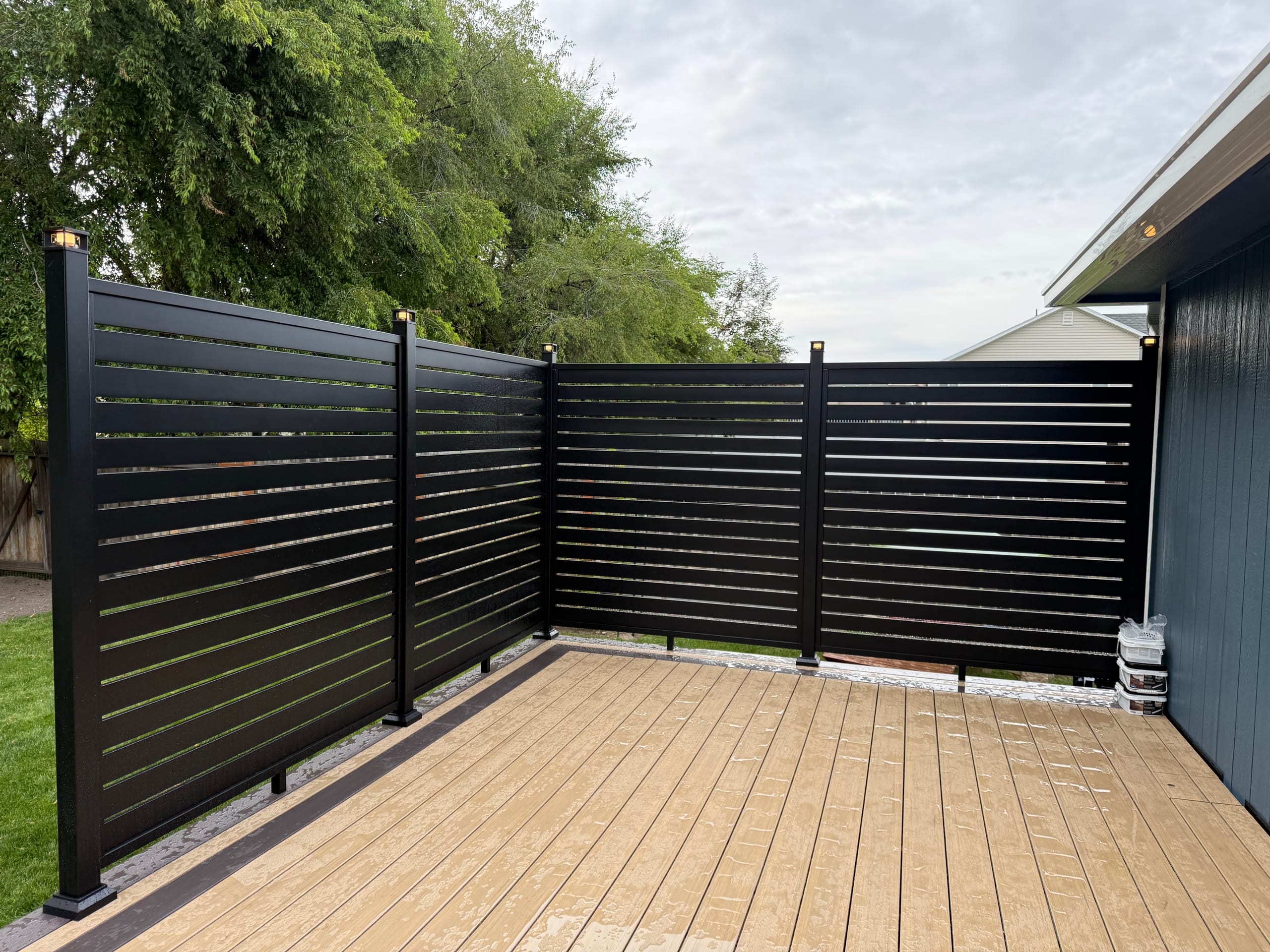
Black horizontal-slat aluminum privacy screen in an L around a tan composite deck
  1. A Focused Privacy Panel

    One panel might be enough beside a table, hot tub area, or favorite seat. We can aim it at the unwanted view instead of closing off the whole side of the deck and losing light you wanted to keep.

  2. A Screen-Wall Configuration

    Several screen elements can define one side of a deck or patio. Their openings and pattern still matter; if you want a continuous solid wall, we should price and plan that as a different structure.

  3. A Standalone Privacy Screen

    A standalone screen may make more sense than connecting a panel to the deck or house. We look at its position and support along with the material so it can do the job where you actually need it.

Compare Cedar, Vinyl, and Aluminum Screens

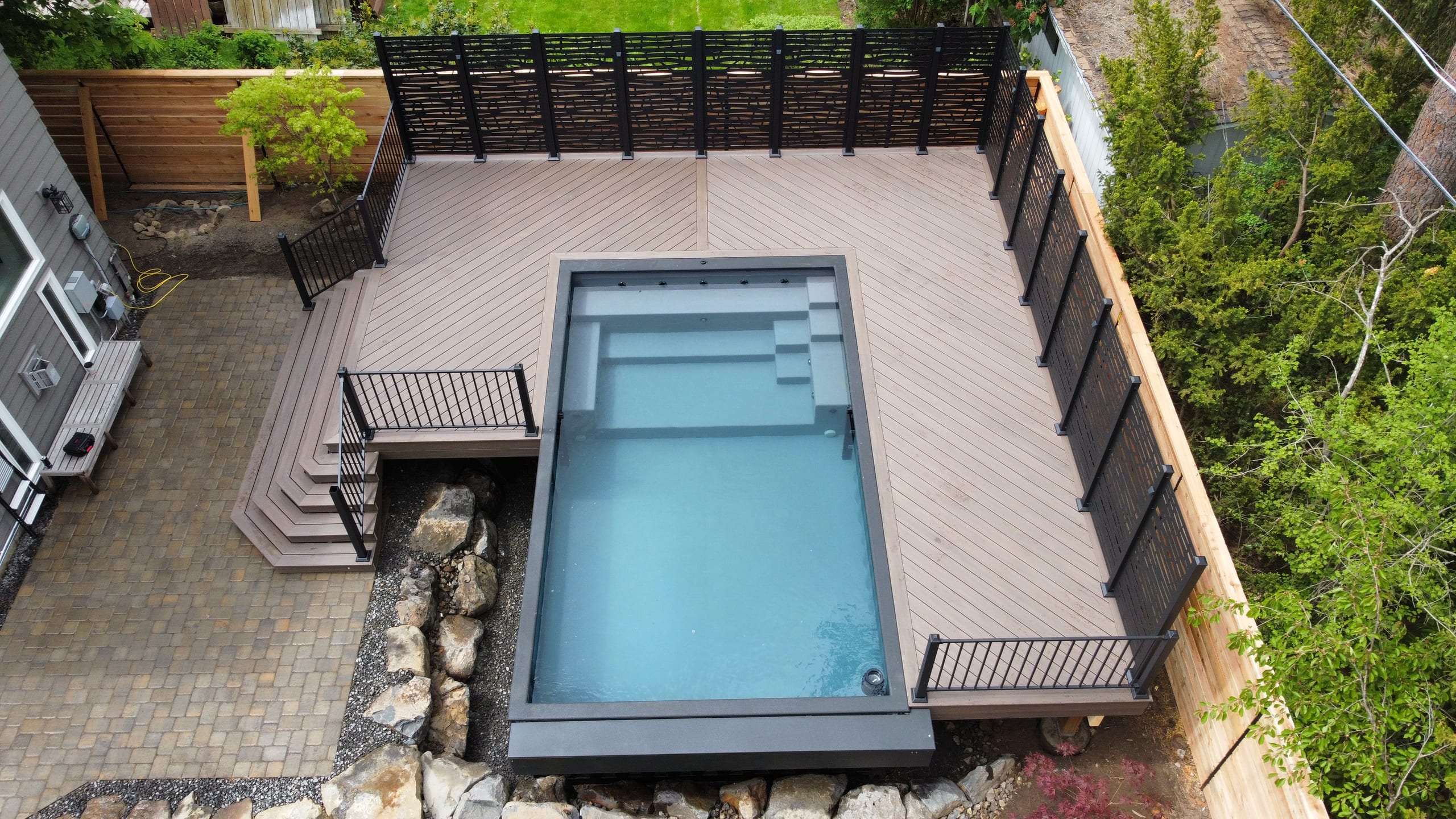
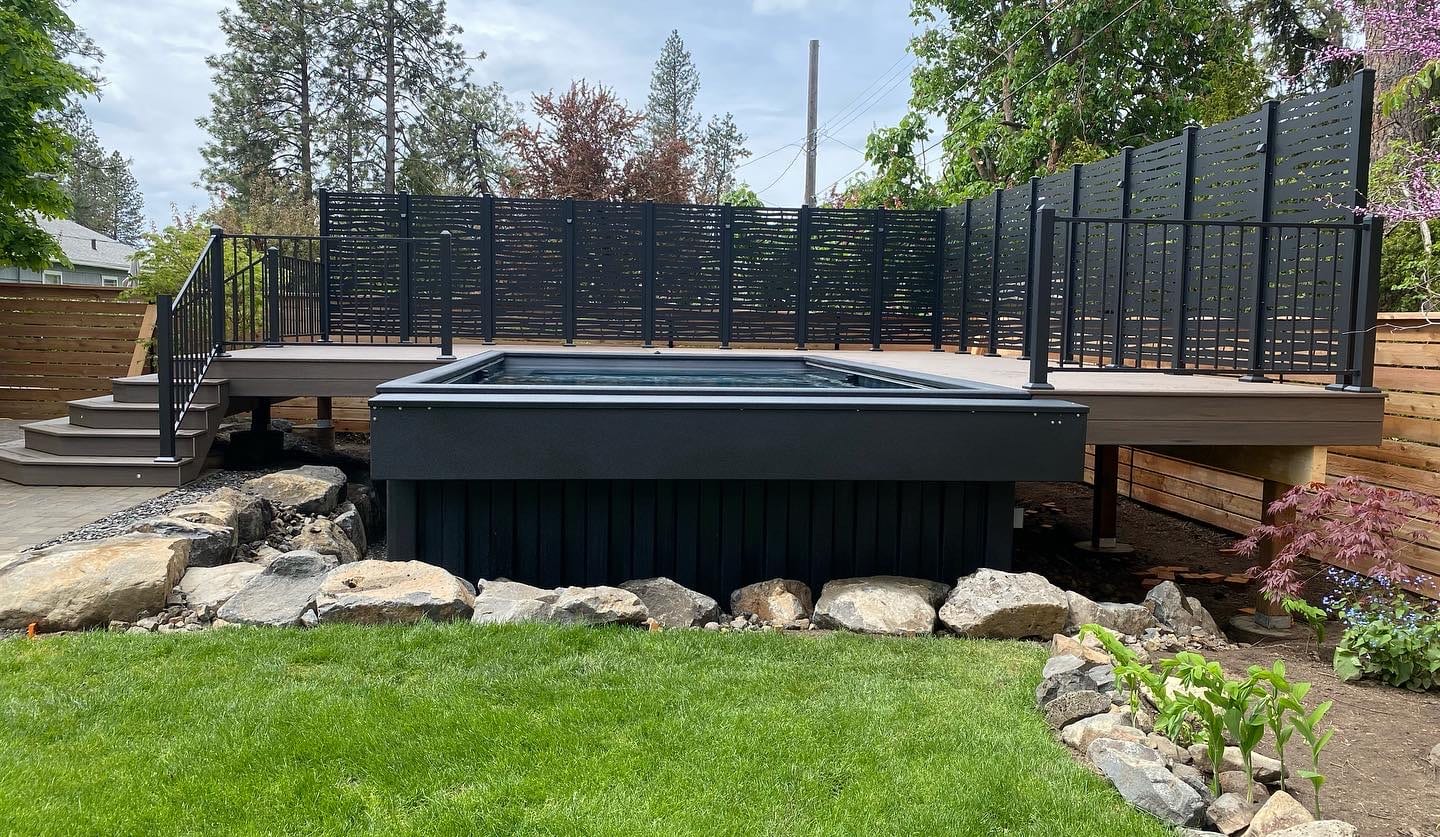
Raised pool deck with black steel surround, screen fence and lawn with rock edge
  1. Cedar Privacy Screens

    Cedar brings visible wood character to a screen. We look at the spacing and arrangement of the pieces as well as the material, because those details determine what you can see through it from the seats.

  2. Vinyl Privacy Screens

    Vinyl has a different finished look from wood. Before choosing it, we can compare the whole panel pattern with the deck, patio, and house rather than relying on a small material sample.

  3. Aluminum Privacy Screens and Frames

    Aluminum can form the screen elements and frame. We can discuss a slimmer-looking panel where the design allows it, then identify the actual material and frame in the written estimate.

Check Privacy Screen Sight Lines From Both Sides

The screen has two views to consider. It needs to interrupt what you see from your seat while still looking right from the house and the rest of the yard.

Position, length, height, and spacing all change how much privacy you get. We check those together at the property before pricing the screen. More coverage is not always better if it blocks the part of the yard you enjoy.

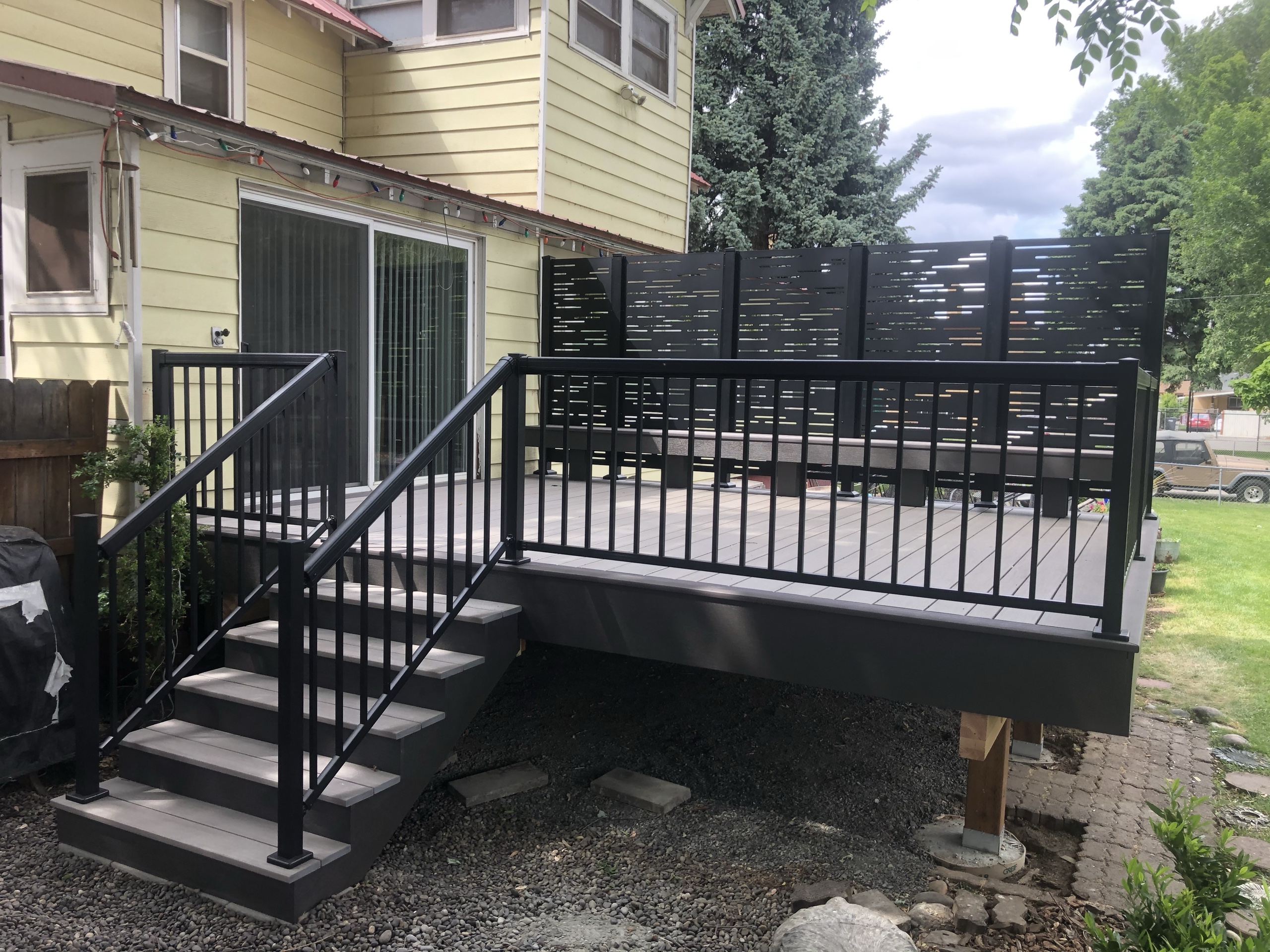
Elevated gray composite deck with black picket railing, stairs and black privacy screen, yellow house

Keep Privacy Screens and Solid Walls Separate

Privacy screens use panels or screening elements to change a view. A solid privacy wall is its own structure and scope. Tell us which result you want so the design and estimate match it.

That distinction matters when you compare proposals. A screen with openings and a solid wall should not be treated as two prices for the same finished feature.

Fit the Privacy Screen to Your Deck or Patio

A panel beside a deck edge or table should not cut off the path into the space. We check where people walk, where furniture fits, and which view can stay open before choosing the screen's position.

If a new deck or patio is in the plan, we can discuss privacy along with the layout. At an existing outdoor space, we measure what is there before choosing a panel, a longer screen arrangement, or a standalone screen.

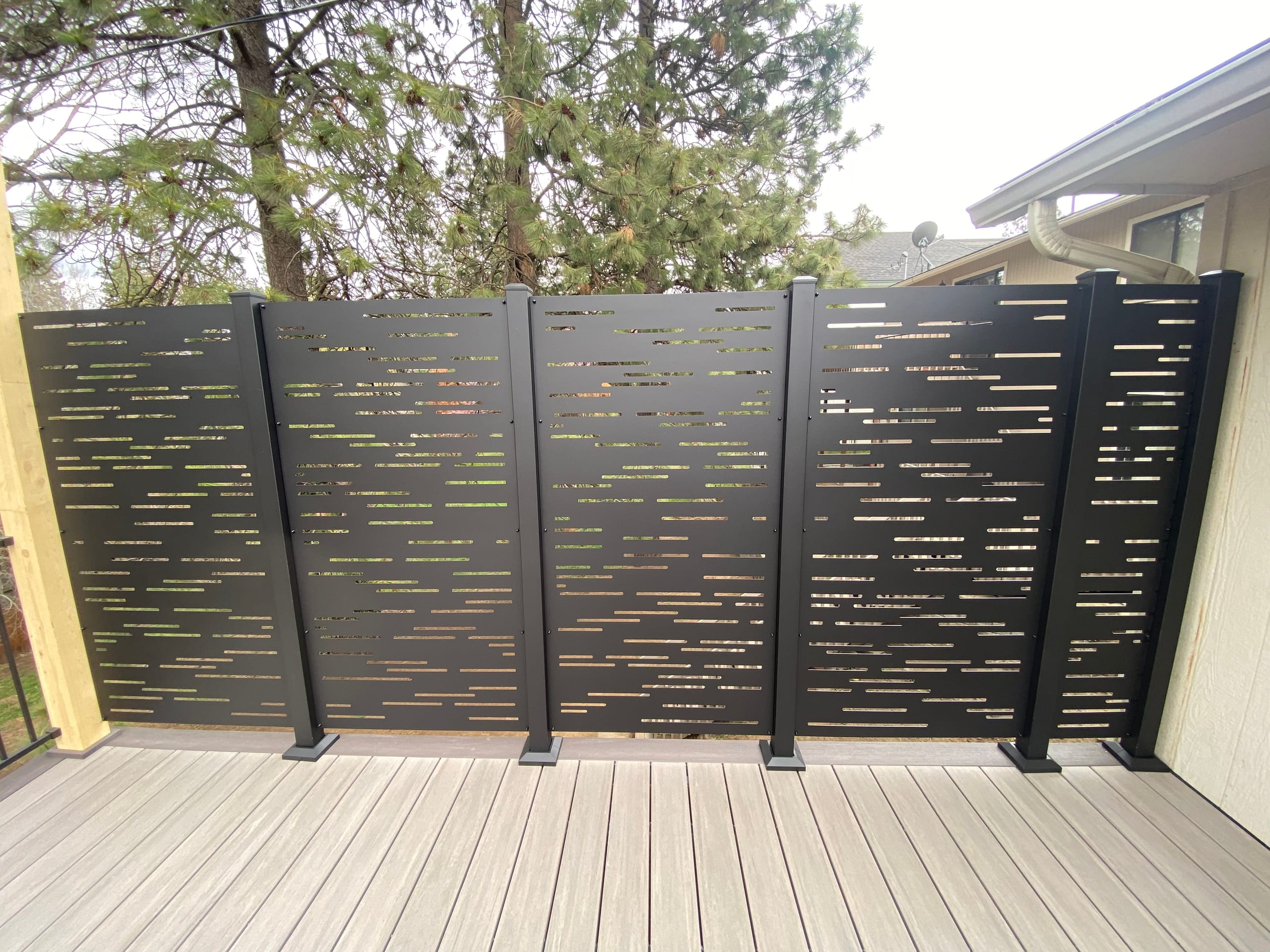
Black perforated metal privacy screen panels on gray composite deck beside a house, pine trees behind
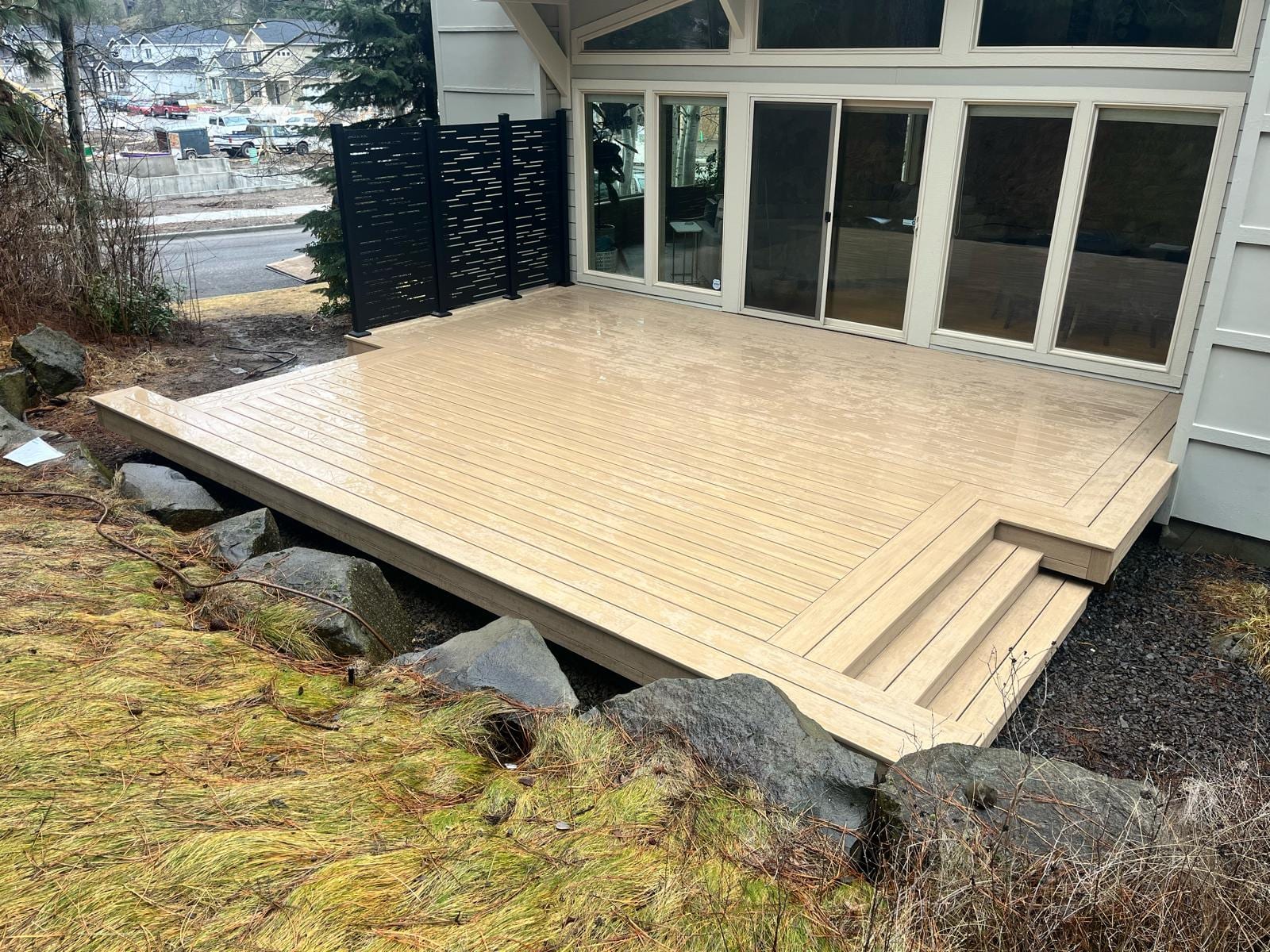
New cream composite low deck with two-step corner beside grey house with large windows, black privacy screen, rocks and grass

Check Local Review for a Privacy Screen

Review depends on where the screen goes, its size and support, and the property. Within Idaho Falls city limits, the City of Idaho Falls is the authority for building permit applications; an address outside the city may be under Bonneville County or another jurisdiction.

We first define the screen and its location, then check which authority and approval steps apply. We will not assume one permit answer fits every screen or every address.
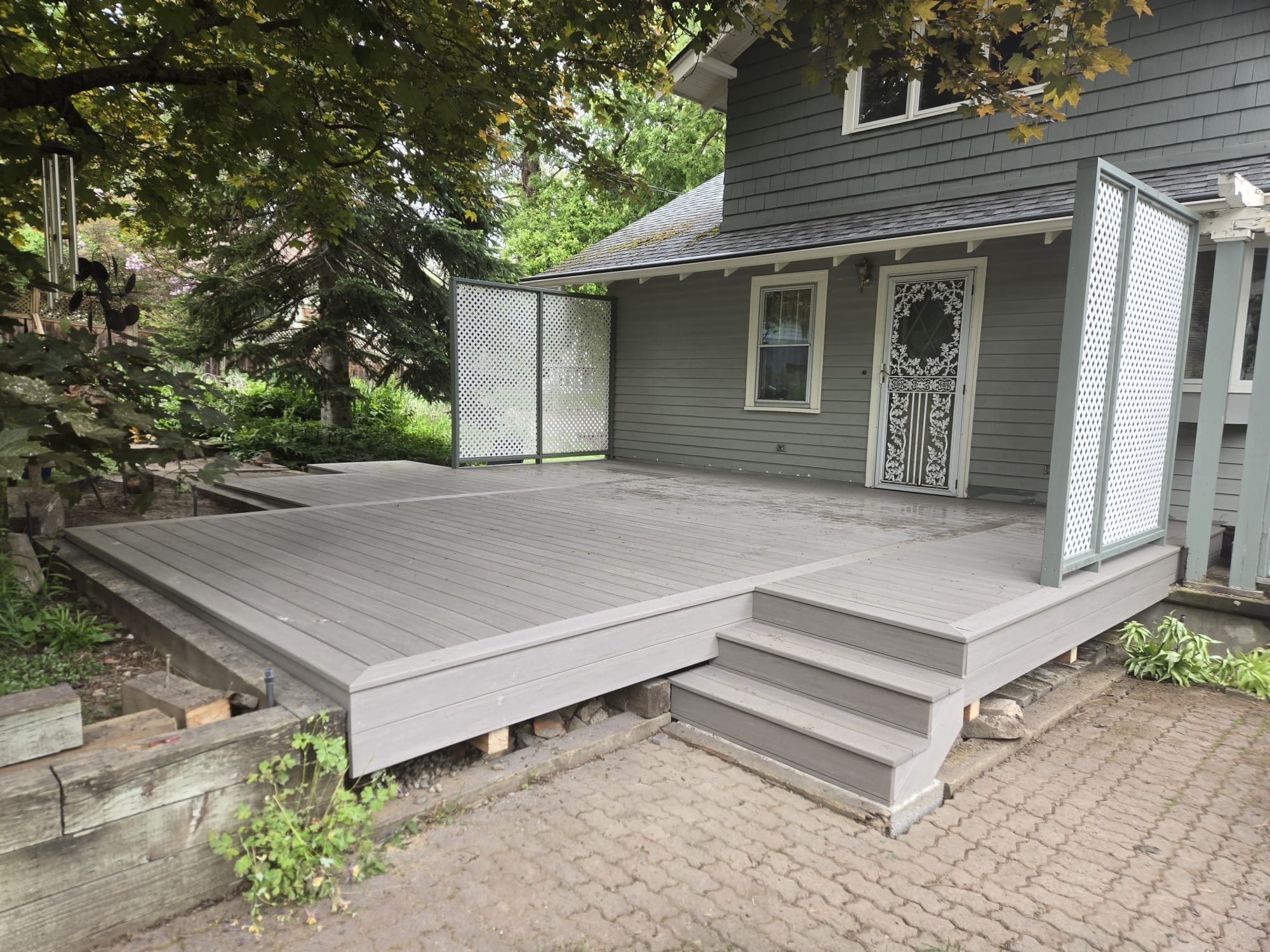
Large light grey composite deck platform with wide steps and a privacy screen panel on a paver patio at a grey house

Why Work With Privacy Screen Installers Who Check Sight Lines

We start with the view you want to block and the view you want to keep. Then we compare a cedar, vinyl, or aluminum screen that fits that part of the outdoor space rather than adding a panel just because there is room for one.

Our estimate names the position, material, pattern, and screen scope. You can see what we are proposing instead of approving an allowance that leaves the important choices for the build.

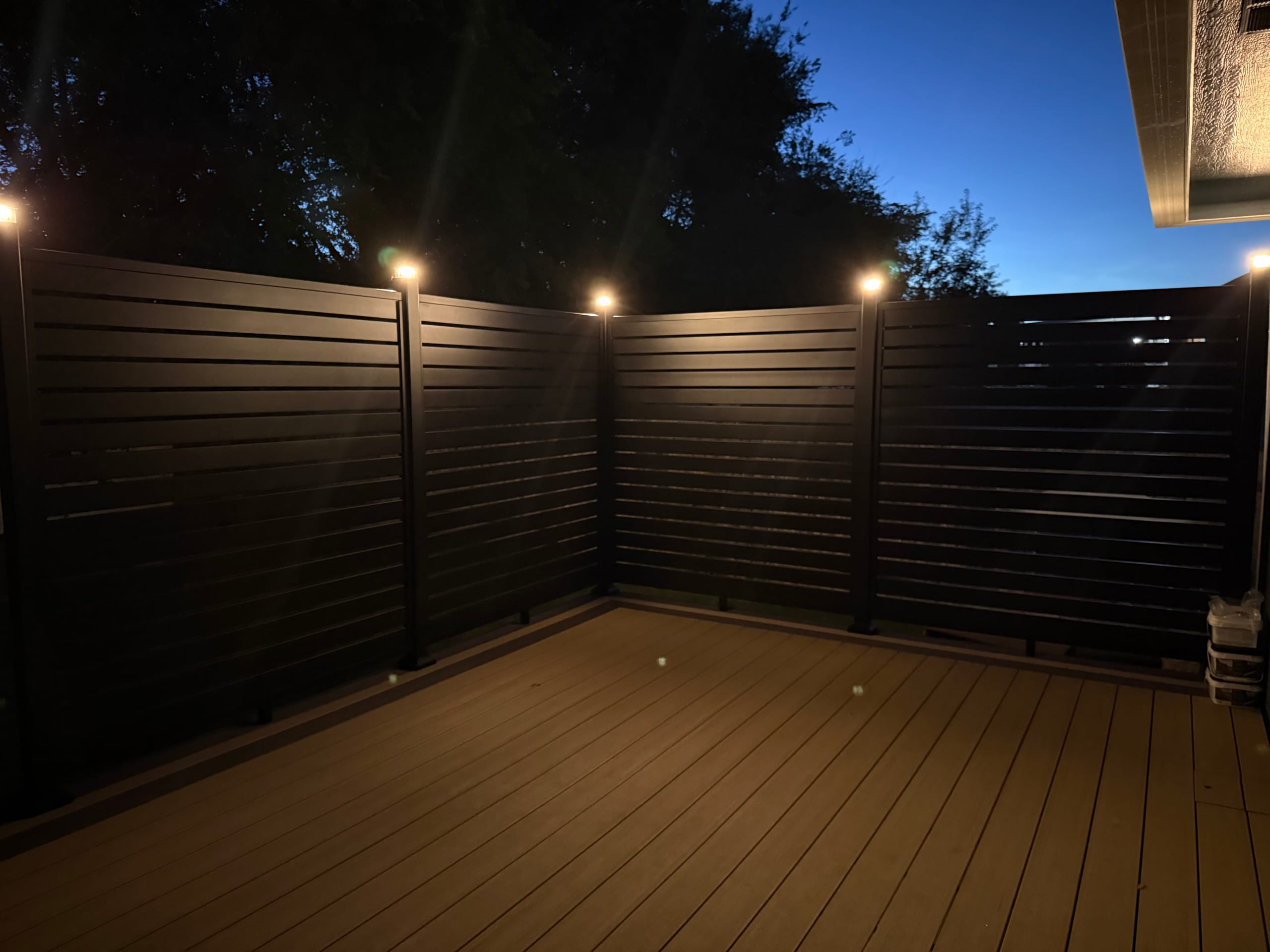
Composite deck corner at dusk with dark slat privacy walls and post-cap lights

What to Look For in Outdoor Project Photos

Photos of decks and patios can help you judge screen placement, not just panel style. Look at the view from the seats, the path through the space, and how a screen fits the house and yard.

Bring the layouts you like to our discussion, and we can check which ideas fit your own property.

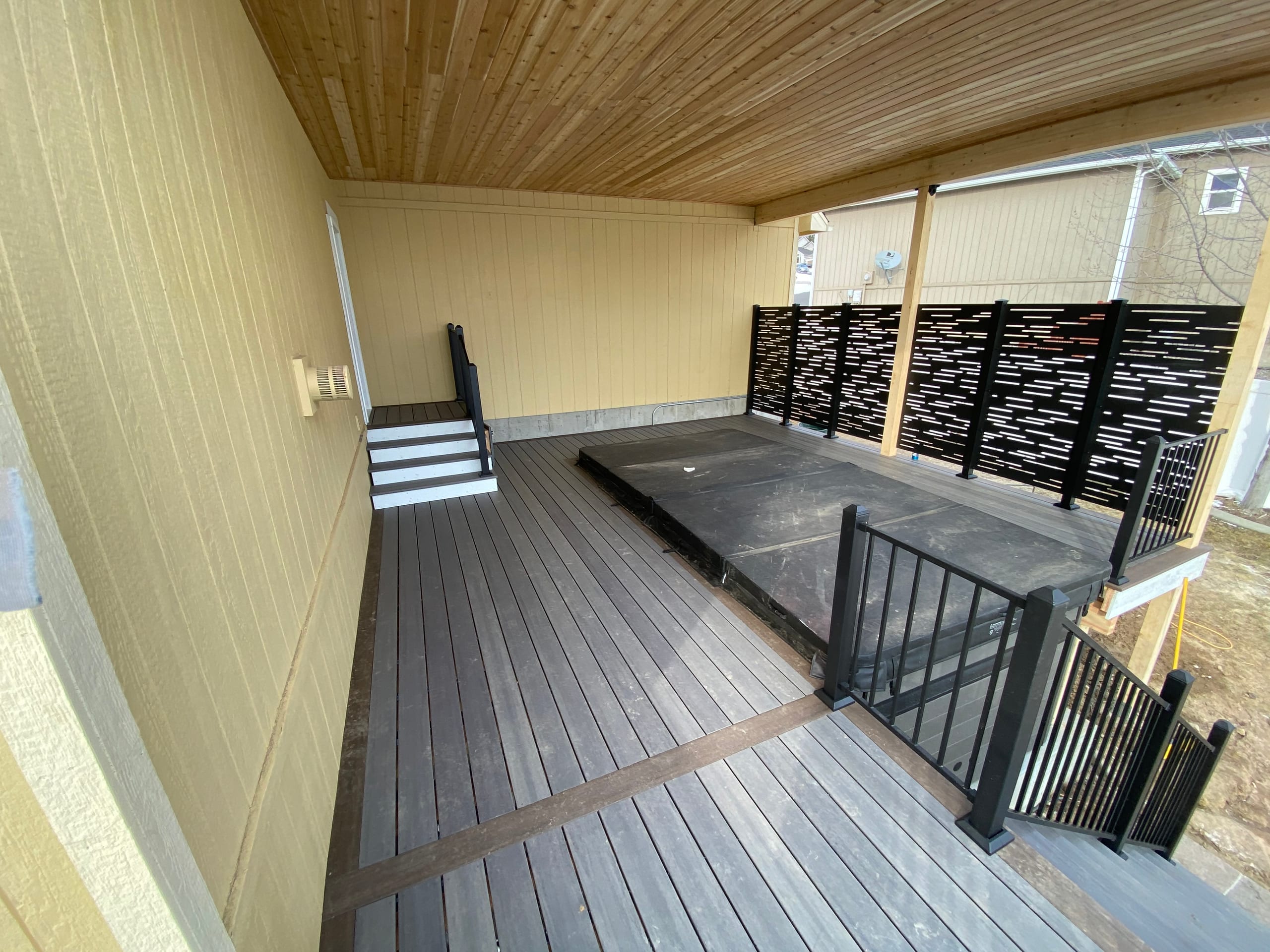
Inside a covered deck with cedar ceiling, dark grey composite decking, perforated privacy screen and black railing

What Local Homeowners Say About Us

Homeowner feedback can help you judge how a builder explains a plan and handles work at the property. Read any available reviews for those details, then tell us what you want to change about your own outdoor space.

Our Privacy Screen Installation Process

  1. Show Us the Unwanted Sight Line

    Show us the seat, table, or walking area where privacy matters. We look along the unwanted sight line and ask which views you want to keep.

  2. Compare Configurations and Materials

    We compare a panel, an arrangement of screening elements, or a standalone screen, then choose a proposed location and size. Cedar, vinyl, and aluminum give us different ways to shape the finished look.

  3. Review the Written Estimate

    We put the material, pattern, position, and included installation work in writing. Once we know the final location and scope, we can identify any local review that applies.

    View our full process page

When a Privacy Screen May Not Be the Right Choice

A screen may be wrong if you want a continuous solid wall or if any panel at the proposed spot would block too much light and view. We should say that before installing a feature you do not want to live with.

A smaller panel or another position may be enough. If you want a solid wall instead, we will discuss that as its own project rather than stretching the screen estimate to cover it.

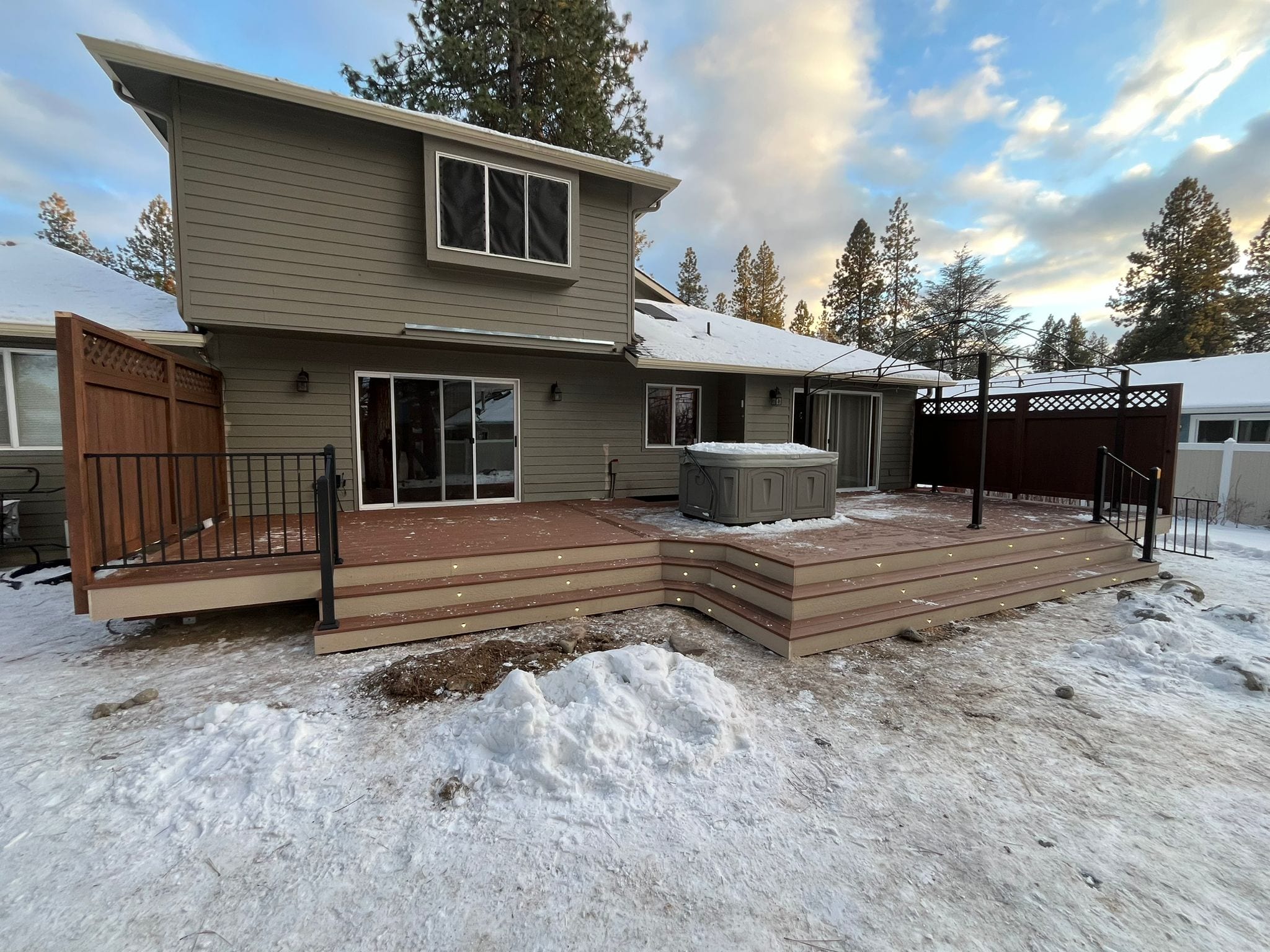
Snowy backyard with new multi-level gray composite deck with black railing, privacy panels and hot tub at tan house

Privacy Screen Installation Questions

What is a privacy screen used for in outdoor spaces?

A privacy screen blocks or softens a specific sight line around a deck, patio, or gathering area. It can give one part of the space more separation while preserving openness in the rest of the yard.

What materials do you use for privacy screen construction?

We build privacy screens with cedar, vinyl, and aluminum, including aluminum framing. We identify the proposed material and frame in the written estimate for your project.

Can privacy screens be customized?

Yes. We can plan the position, length, height, pattern, and material around the view you want to block and the views you want to preserve.

Do you install standalone and attached privacy screens?

We install standalone privacy screens, privacy panels, and screen-wall designs. If you want a screen coordinated with a new or existing deck, we define whether it belongs in the larger deck plan rather than promise every attached configuration before reviewing the property.

What is the difference between a privacy screen and a privacy wall?

A privacy screen uses panels or screening elements to interrupt a view and may preserve some openness. A privacy wall is a separate project category. We keep the two scopes distinct so your estimate reflects the feature you actually want.

Who reviews privacy-screen permits in the city?

For a property within city limits, the City of Idaho Falls handles building permit applications. A property outside the city may fall under Bonneville County or another authority, so the location and complete screen design need to be defined first.

When is an outdoor privacy screen the wrong choice?

It may be the wrong choice when you want a solid privacy wall, want no visual barrier at all, or would lose more light and open view than the added privacy is worth. A smaller panel or different placement may be a better answer.

Related Services for Your Outdoor Space

Start Your Privacy Screen Installation

Show us the view you want to change and the openness you want to keep. We will compare the screen layouts and cedar, vinyl, or aluminum options that fit that spot, then prepare a written estimate for the proposed work.

Call (208) 274-3260 to get started.