
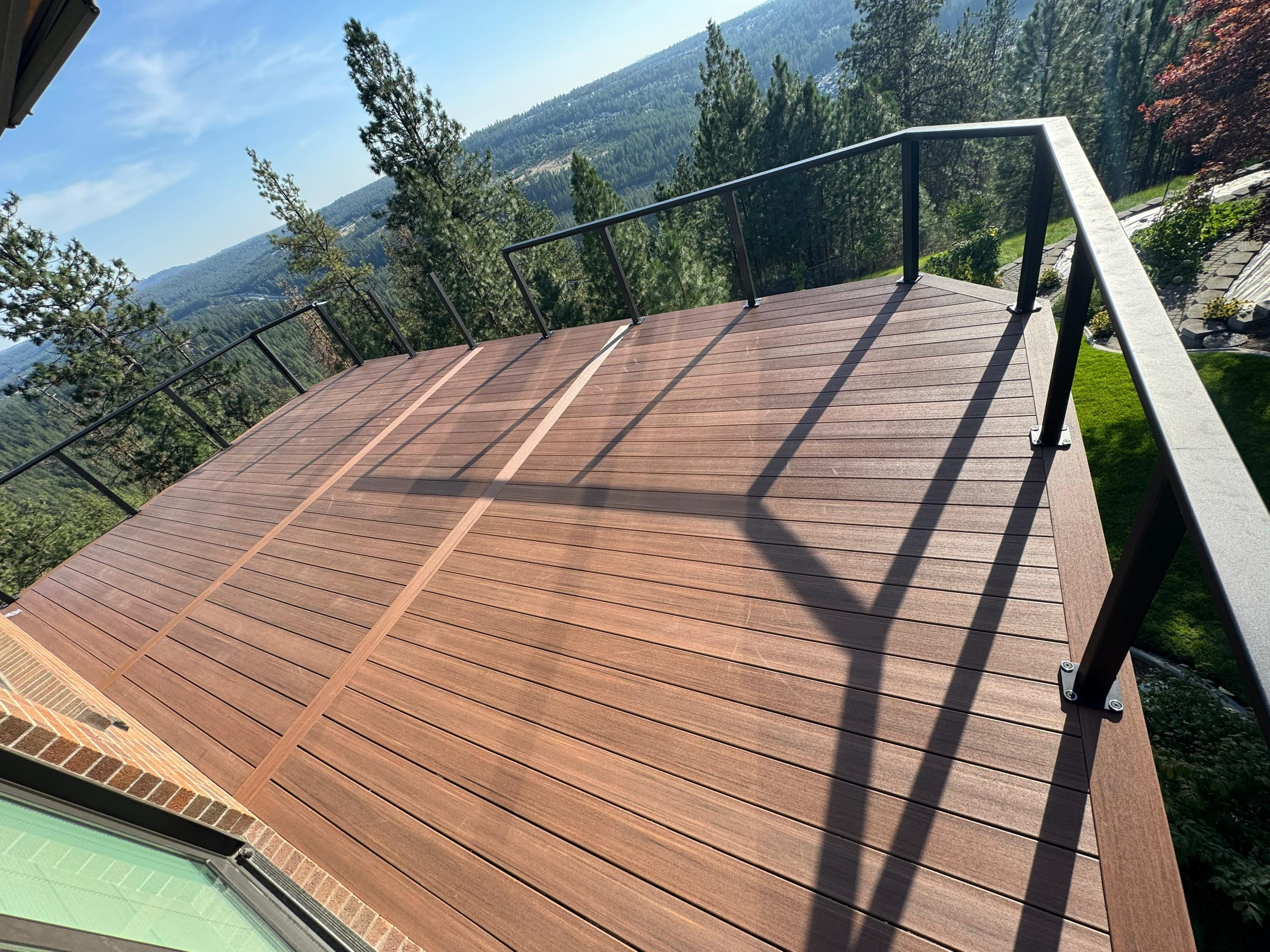
Decking & Railing
PVC Deck Installation in Idaho Falls, ID
Dynamic Decks Idaho Falls designs and installs custom PVC decks for homeowners who want an engineered deck surface made without organic wood filler. We compare PVC with composite and wood in the context of moisture exposure, sun, layout, upkeep and total project budget, then plan the boards with the framing, stairs, railings and permit work the deck requires.

Request a Free Estimate
No obligation. We'll get back to you fast.
Choose PVC When Its Material Difference Matters
PVC decking uses engineered polymer boards without organic wood filler. That is the main material difference from composite, which includes organic material such as wood fiber. We start there, then compare the actual boards you can choose for your deck.
PVC may be worth a closer look if moisture exposure, board weight or a particular finish matters to you. It is not the automatic choice. We also talk about sun, temperature movement, the feel underfoot and the cost of the whole deck.
PVC still needs cleaning. Leaves, food and dirt collect on any deck, and snow and ice care depends on the board you select. We will go over that product’s current care instructions with you.
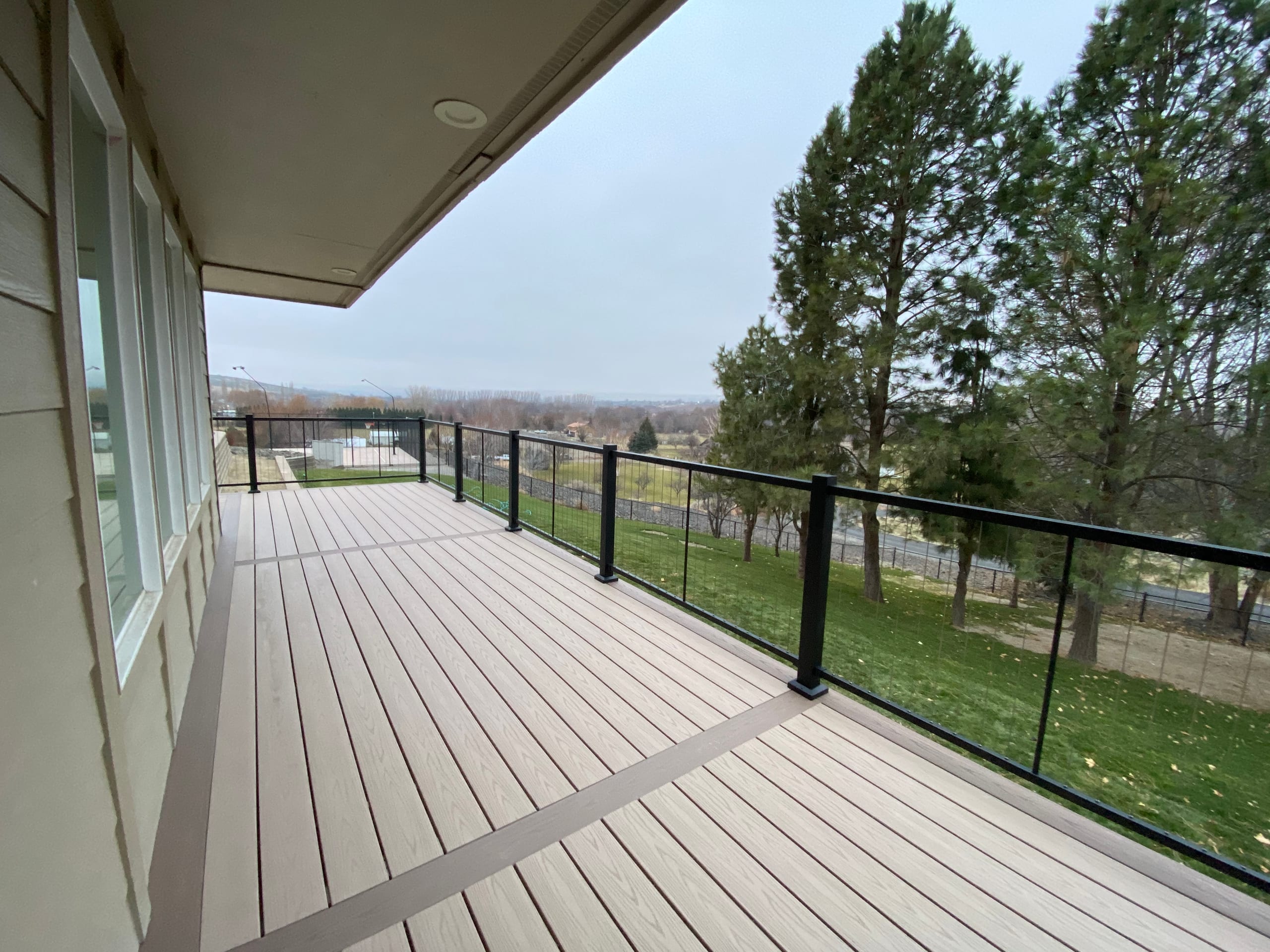
Account for Idaho Falls Temperature Changes
PVC boards expand and contract as their temperature changes. We plan spacing and fastening for the actual product and conditions, especially when the deck sees summer sun and winter cold. There is no single gap that fits every board.
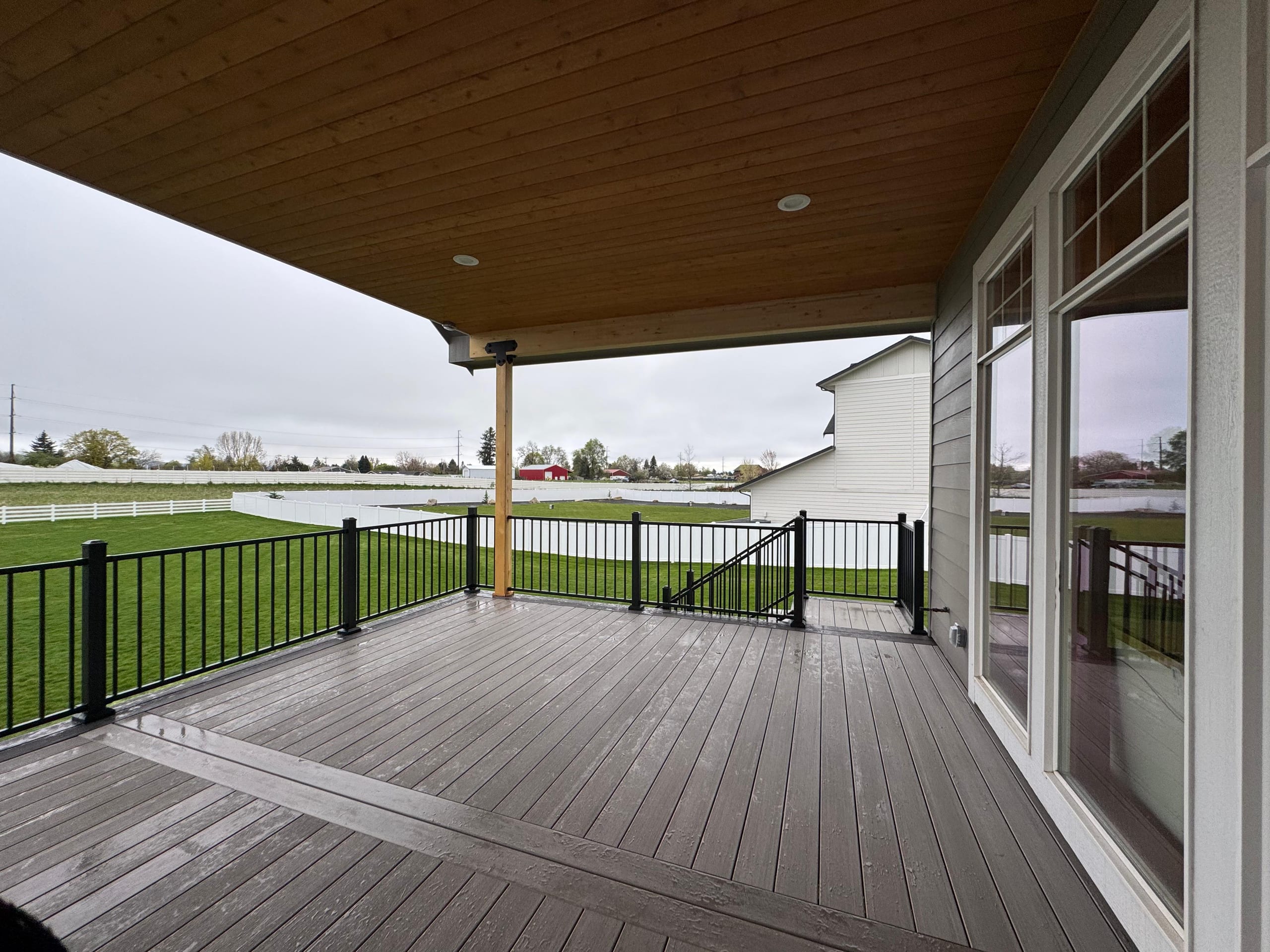
Plan PVC Decking Installation Around Seams and Borders
Long runs, borders, breaker boards and miters make board movement easier to notice if the layout is wrong. We choose where the seams will go and make sure the frame supports the pattern before ordering material.
Match Spacing to Conditions During Installation
A board stored in shade can be cooler than one lying in the sun. We follow the selected product’s current instructions for storage, cutting, spacing and fastening under the conditions on installation day.
Treat Traction and Winter Care as Separate Questions
A moisture-resistant board can still have water, snow, ice or buildup on its surface. No outdoor deck is slip-proof. We compare texture, drainage and cleaning needs instead of promising traction in every condition.
Compare PVC and Composite without Blending the Categories
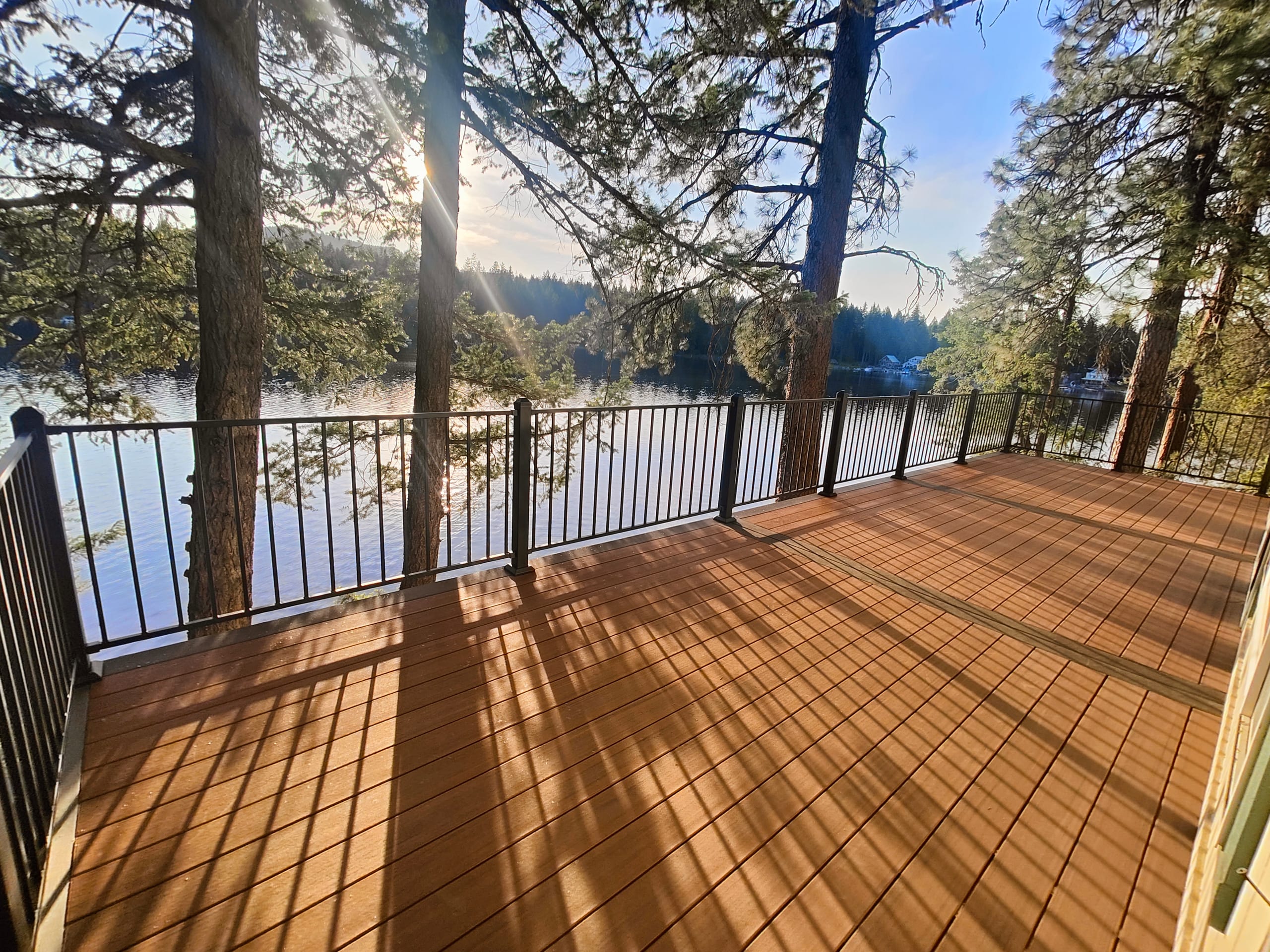
PVC and composite are both manufactured decking, but they are not the same material. Keeping the distinction clear helps you compare actual benefits and trade-offs instead of relying on a general low-maintenance label.
PVC Decking
PVC has no organic wood filler in the board. It may be lighter than a composite option and resists moisture within the board, but we still have to allow for its temperature movement.
Composite Decking
Composite contains polymer and organic material such as wood fiber. Depending on the collection, it may feel denser and offer different wood-look finishes. We compare specific profiles, caps and care instructions rather than treating every composite board alike.
Wood Decking
Wood brings natural grain and can be refinished, but it asks for a different care routine. We can discuss cedar, redwood, ipe, other hardwoods and pressure-treated lumber as decking options. Pressure-treated boards are also a separate material decision from pressure-treated framing; we will confirm the actual surface choice for your estimate.
We compare the boards available for your project and price the full build, not just a sample board against a generic alternative.
Confirm the PVC Product Before It Enters the Estimate
We install PVC decks and can compare TimberTech by AZEK products that fit the project. We also discuss Trex decking where the material category fits, but we check the exact collection and local availability before including any board in your proposal.
TimberTech by AZEK Options
TimberTech sells both composite and PVC boards. If a PVC collection fits the project, we will identify that exact board and compare its color, profile, fastening and current care instructions with the plan.
Trex Options
Trex is another decking brand we can discuss. If a Trex board comes up, we check its actual material category and local availability rather than call it PVC based on the brand name.
The written estimate will identify the actual material so you are not left guessing whether the board is PVC or composite.
Understand the Scope of a PVC Deck Build
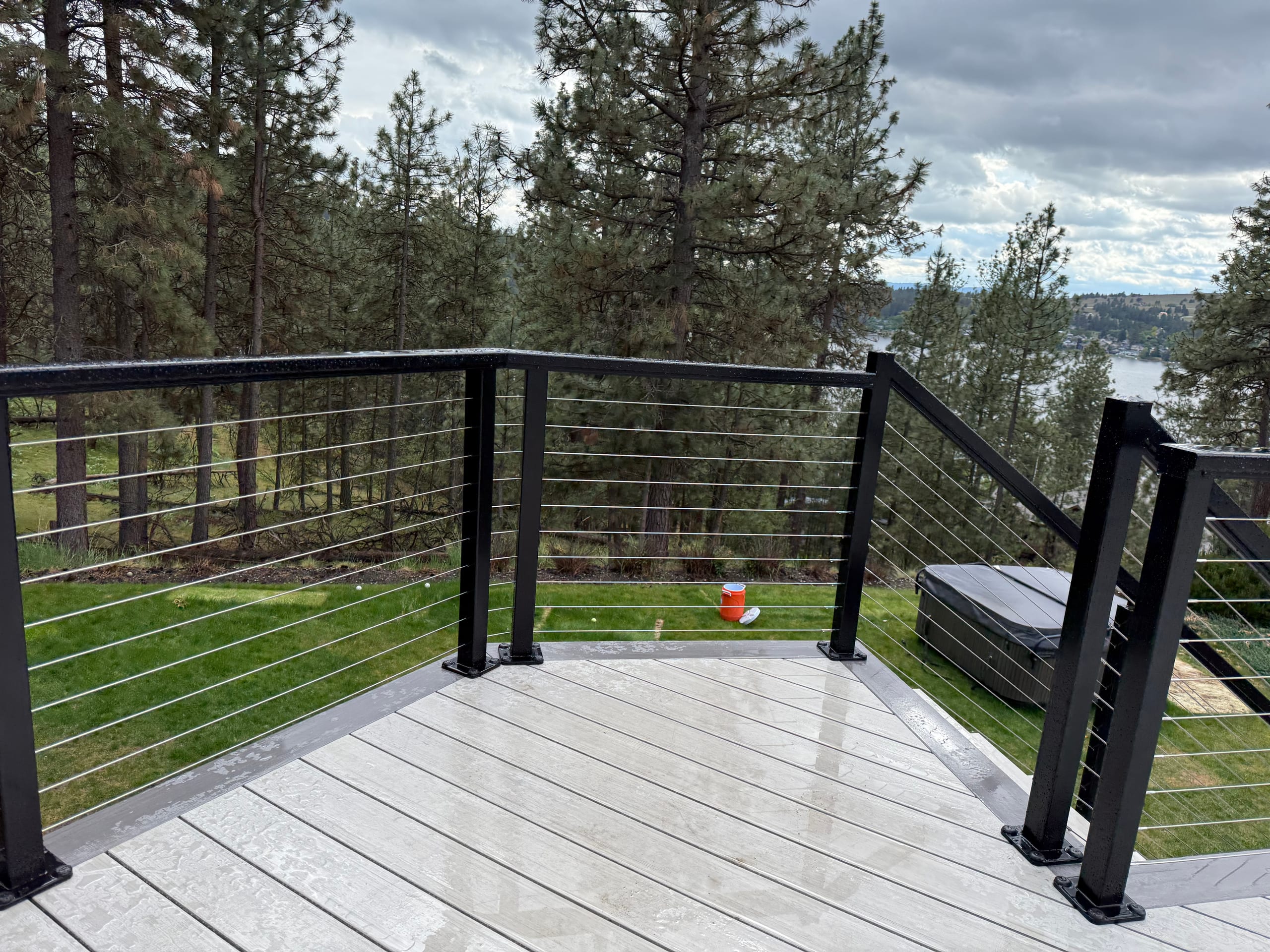
PVC is the walking surface, not the foundation or frame beneath it. Depending on the agreed scope, our new-deck work can include design, a 3D model, footings, framing, stairs, railings and applicable permit acquisition. We show you which parts are included in the estimate.
We can also price connected features such as privacy screens, skirting or an underdeck system as separate parts of the plan when they fit the project.
If you want to keep an existing deck, tell us what is there. Our Idaho Falls team also offers deck repair, but that work should be evaluated and quoted separately rather than folded into a new PVC deck proposal.
Build the Surface Around Product-Specific Details
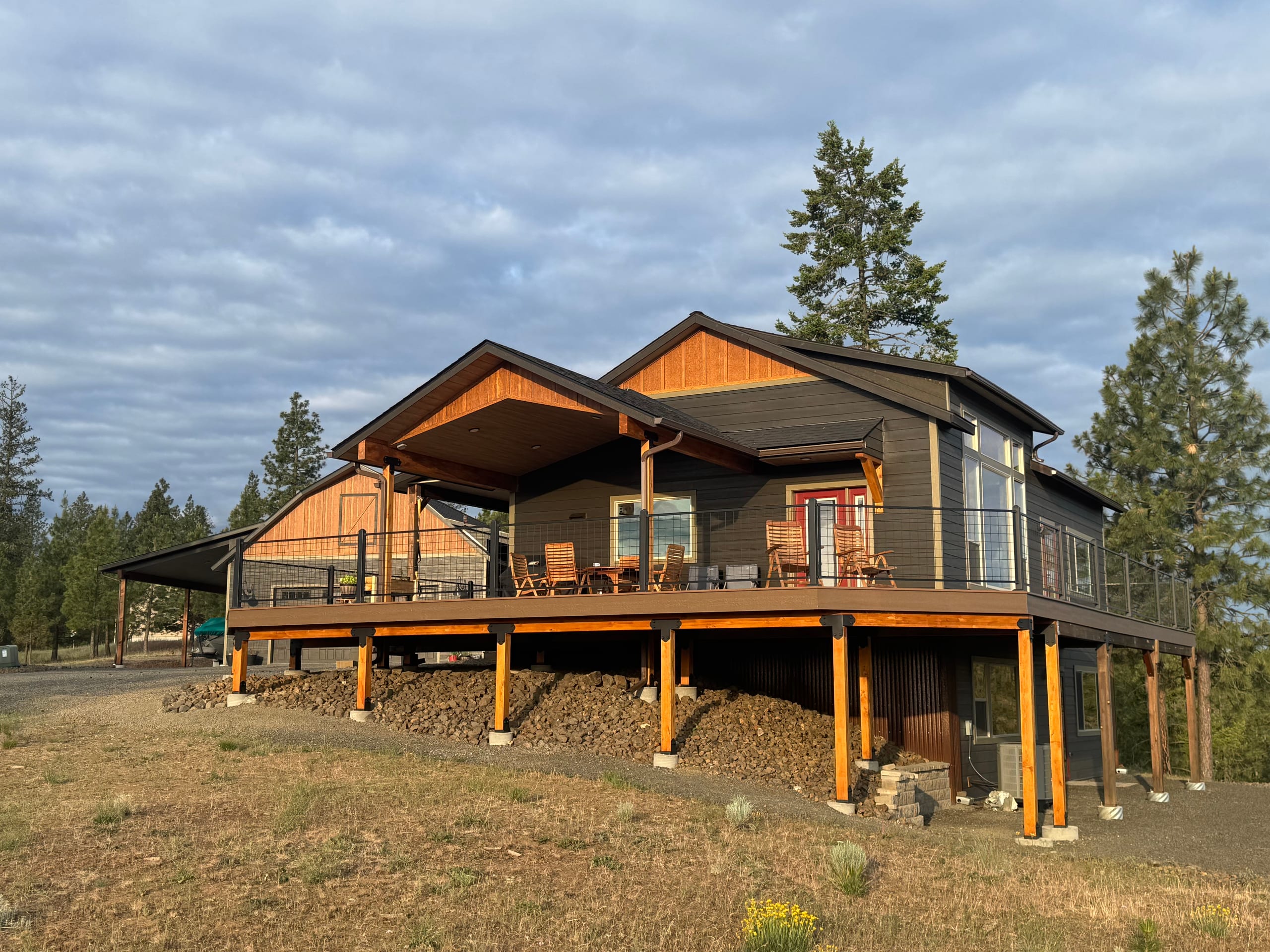
PVC installation depends on more than fastening boards in a row. The board profile, temperature, layout and visible edges all affect how the surface should be supported and attached.
Coordinate the Frame and PVC Surface Plan
The frame needs to support seams, borders, stairs, fascia and railing connections. A lighter board does not remove the need to plan the whole deck’s structure for its size and use.
Use Fasteners Approved for the Chosen Board
A grooved board may take hidden clips in the main deck field. Borders, stairs and fascia may need a different compatible fastening detail. We check the hardware against the exact board and layout.
Set the Visible Details Before Ordering
Board direction, border color and stair treatment affect both the look of the deck and what goes into the order. We settle those choices before finalizing the scope.
Choose a Builder Who Explains the Trade-Offs
PVC can cost more than some other decking choices. For some homes, the board’s makeup and available finish make that worthwhile; for others, composite or wood fits better. We compare the complete build so the material decision makes sense for your budget.
If you are comparing PVC deck builders, ask how each one will plan the board layout, framing and fasteners. We measure the site, compare available boards and prepare a written estimate. A 3D model or permit acquisition can be included when the agreed project calls for it.
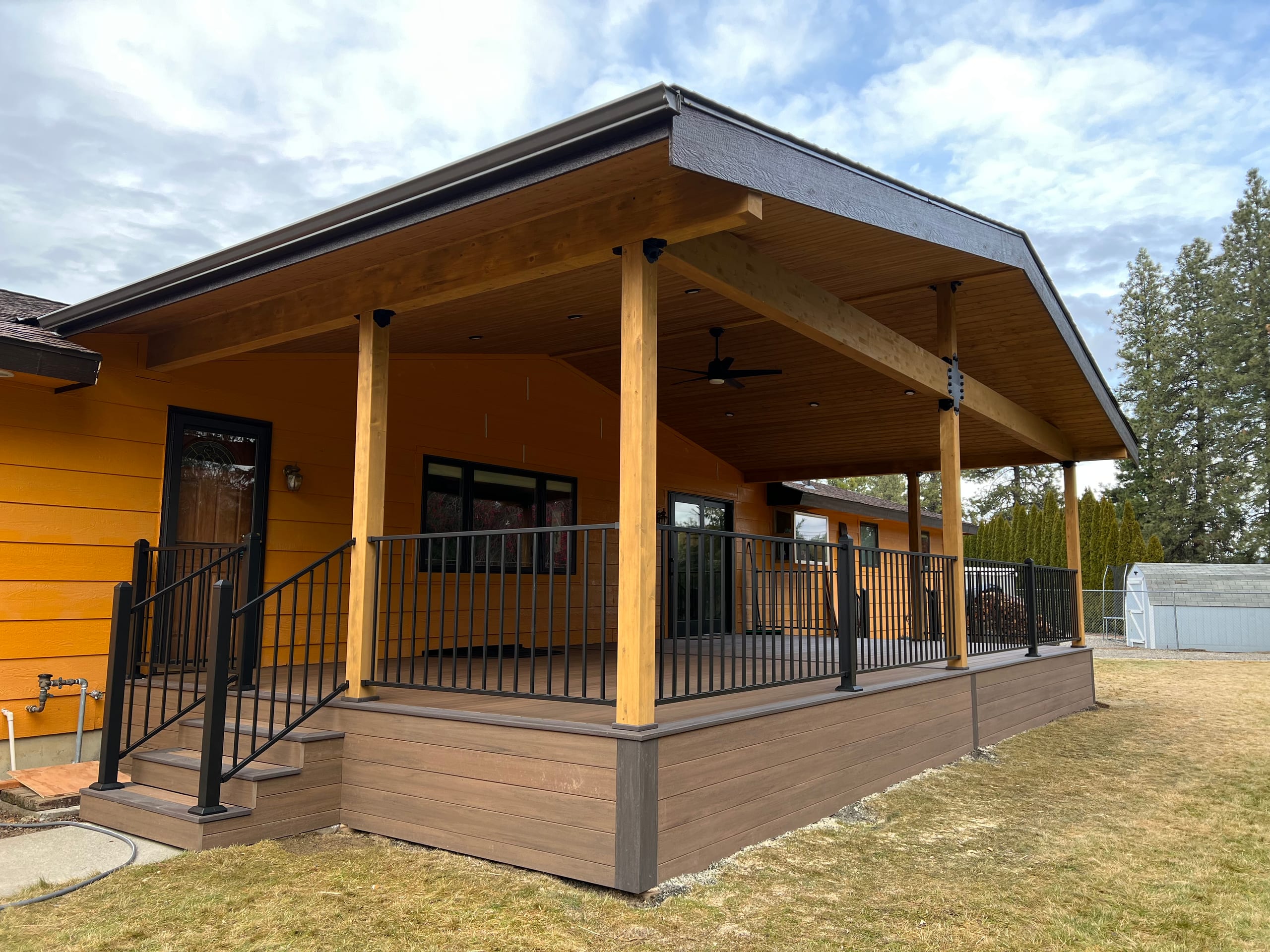
Our Three-Step PVC Deck Process
-
Measure the Site and Define How the Deck Will Work
We review the proposed size, grade, access, sun, stairs, railings and connection to the house. We also talk about furniture, gathering areas and movement between the home and yard. Those details show where PVC's characteristics may matter and where they may not.
-
Compare Available PVC Boards and Layouts
We confirm which PVC products can be sourced, then compare color, texture, board profile, temperature movement, care and budget. The design addresses board direction, seams, borders, stairs and railings. If a 3D model will make those choices easier to understand, it can be included in the planning work.
-
Prepare the Agreed Construction Scope
Your estimate identifies the proposed PVC material and related work. Once the choices are settled, we prepare the construction details, confirm product availability and address applicable permits. For property inside city limits, the City of Idaho Falls Building Division is the local permit authority.
See our full deck design and installation process.
Explore Related PVC Deck Projects
Project photos can help you compare board direction, border contrast, stairs and railings. Bring us the details you like. We will check them against your property and the PVC products available for your build, not copy someone else’s layout.
PVC Decking Questions
What is PVC decking used for?
PVC decking is used as the finished walking surface on a deck. It is an engineered polymer board made without organic wood filler. The boards install over a separately planned frame and can be used with custom layouts, stairs, railings and border details.
What are the advantages of PVC deck installation?
PVC offers strong moisture resistance within the board, lower board weight than many composite options and a range of manufactured colors and textures. It also avoids the routine sanding, staining and sealing associated with wood decking. PVC still needs cleaning, seasonal care and product-specific spacing and fastening.
Do PVC deck builders offer custom solutions?
Yes. We design custom PVC deck layouts around the property, access, sun, stairs, railings and intended use. Board direction, borders, seams and fastening details can be planned together, and a 3D deck model can be included when it helps you review the design.
How durable is PVC decking?
PVC is designed to resist moisture within the board and does not contain organic wood filler. Durability still depends on the selected product, correct installation and appropriate care. Scratches, heat, snow, ice and surface buildup remain practical considerations, so we review the exact board's current guidance.
Does the City of Idaho Falls require a permit for a PVC deck?
The permit requirement is based on the complete deck project, not whether the surface is PVC. The City of Idaho Falls Building Division states that a permit must be obtained before regulated construction starts. We can include permit acquisition in the scope after confirming the design and property jurisdiction.
When is PVC decking the wrong choice?
PVC may be the wrong choice when its advantages do not justify the added material investment for your project, when you prefer the feel and makeup of composite, or when you want natural wood that can be refinished. Availability can also narrow the useful choices. We compare real products and the complete build so the decision is based on your priorities rather than a category label.
Related Deck Services
-
Composite Decking in Idaho Falls
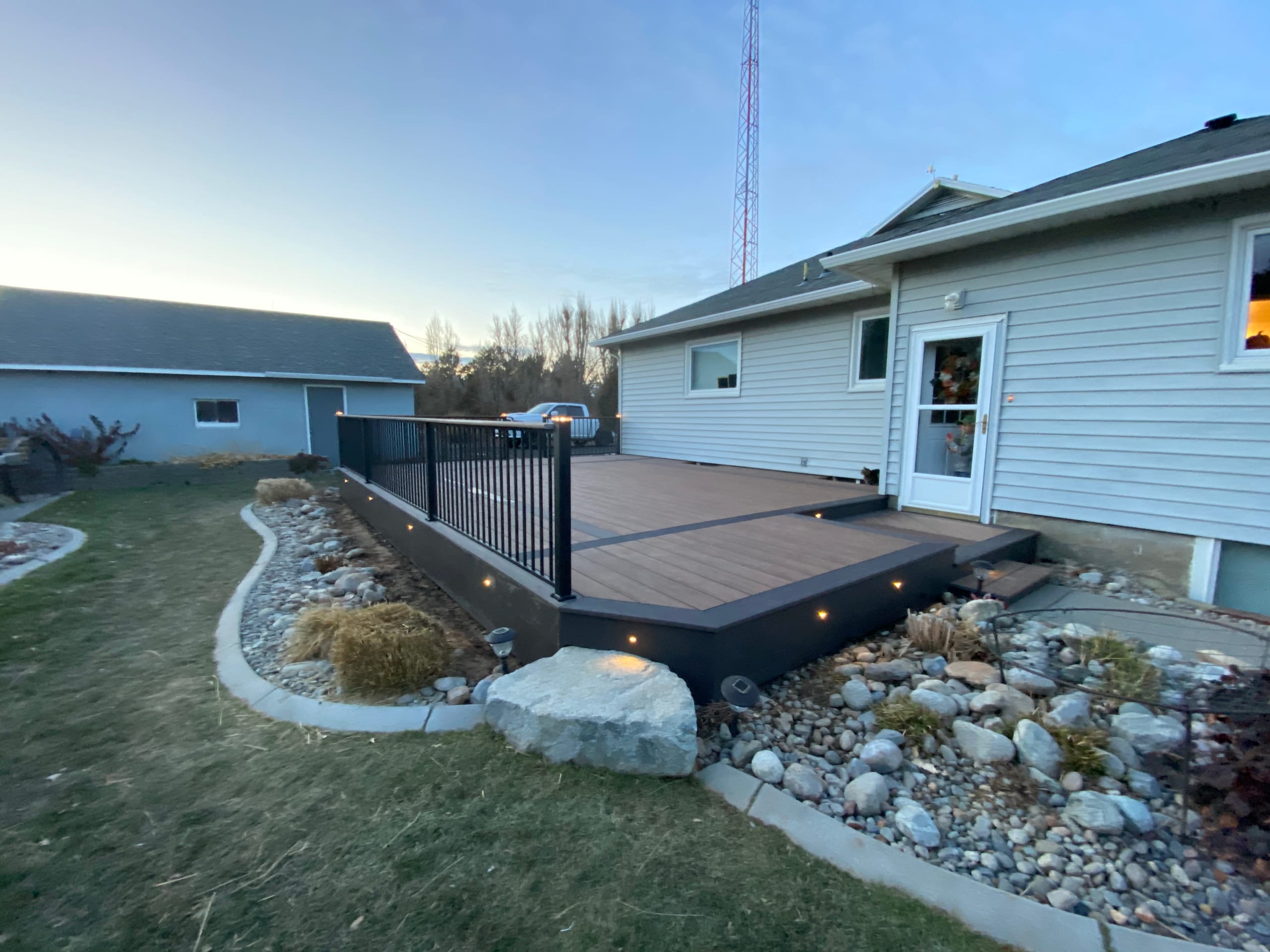
Compare composite with PVC when you want a manufactured surface but are still deciding between an organic-fiber composite core and an all-polymer PVC board.
-
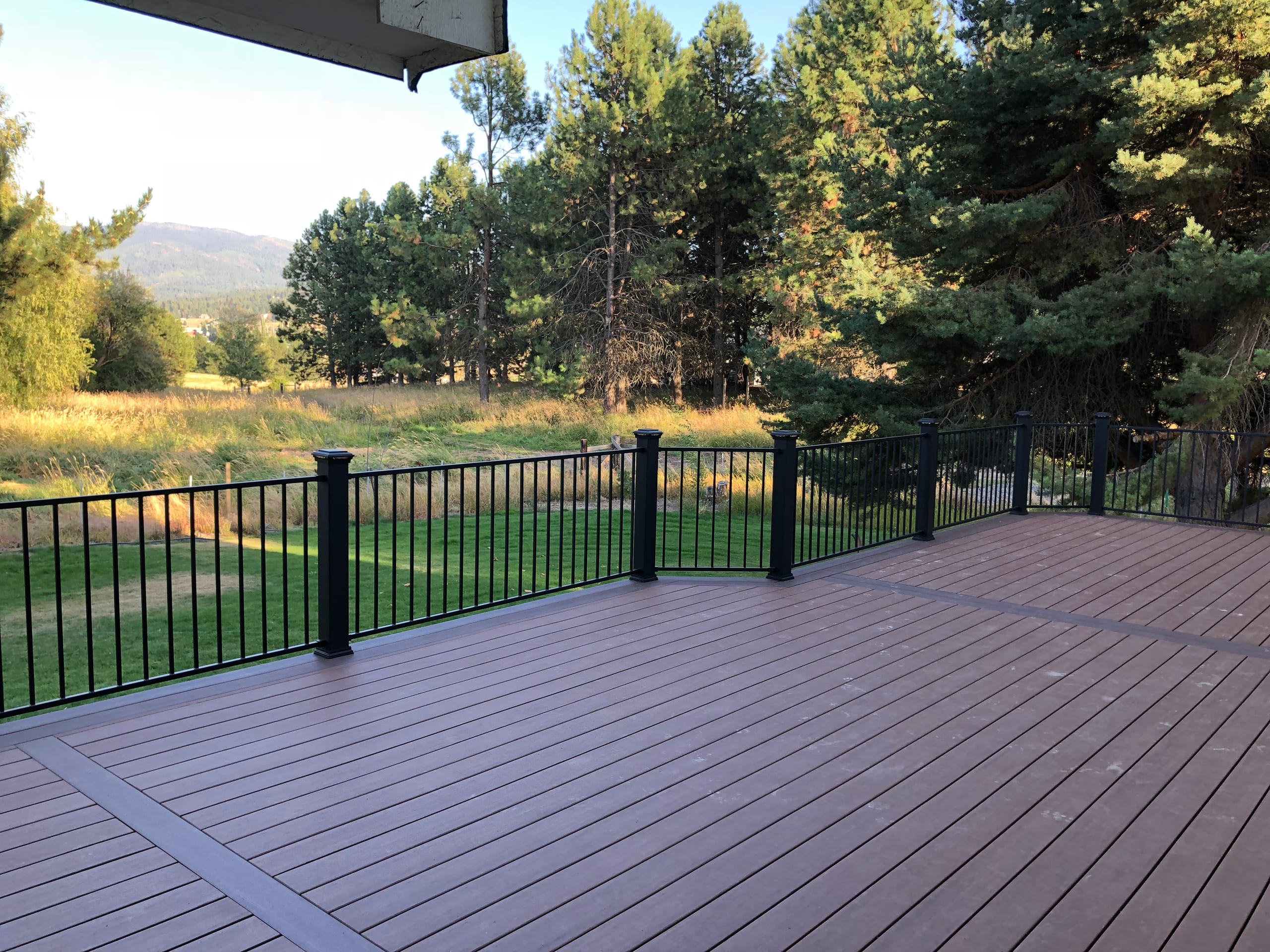
Deck Installation in Idaho Falls
See how the surface connects to foundation work, framing, stairs, railings and the rest of a complete new deck.
-
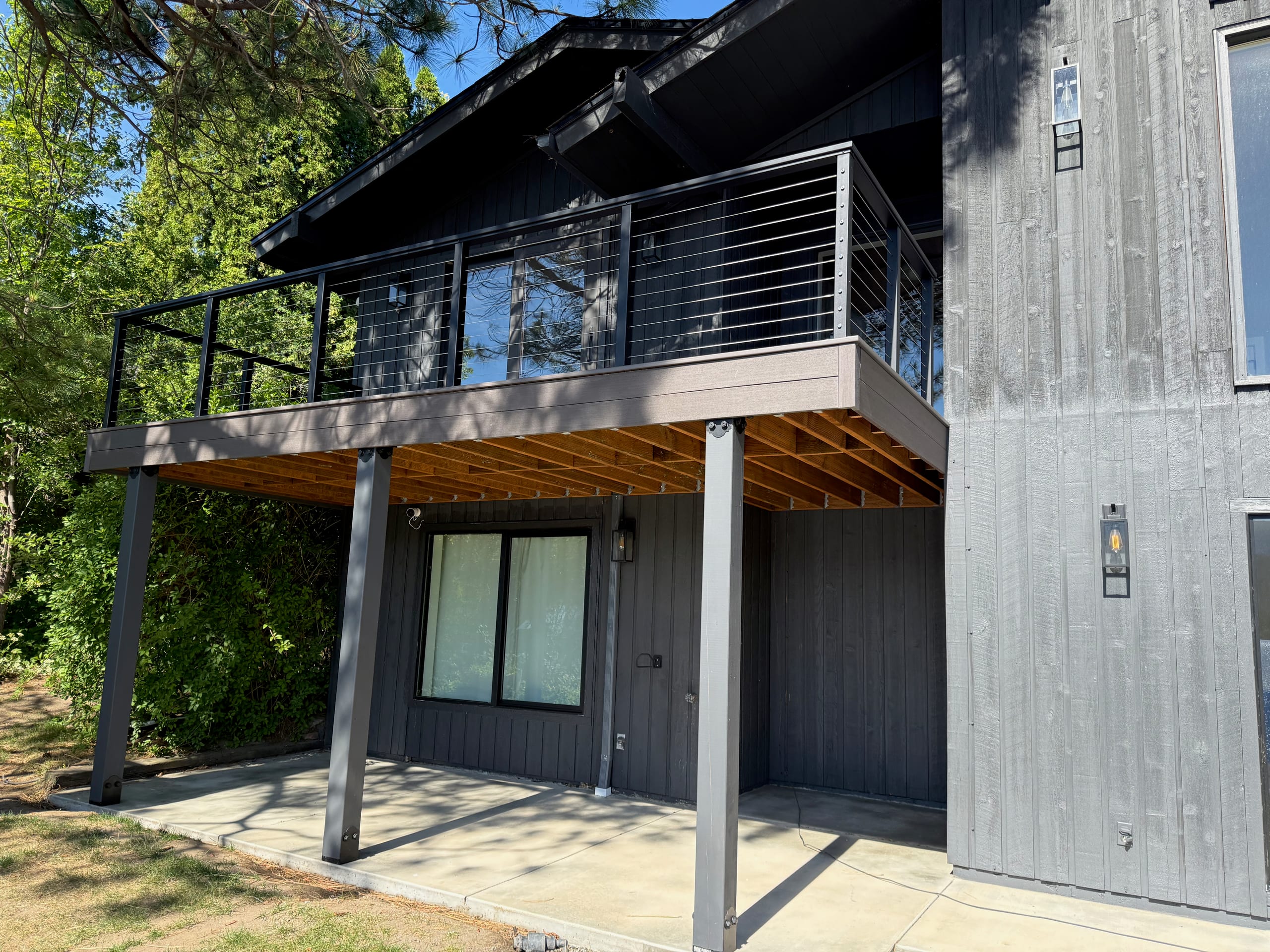
Deck Framing in Idaho Falls
Plan the support beneath PVC boards, including joist layout, blocking, borders, stairs and railing-post locations.
-
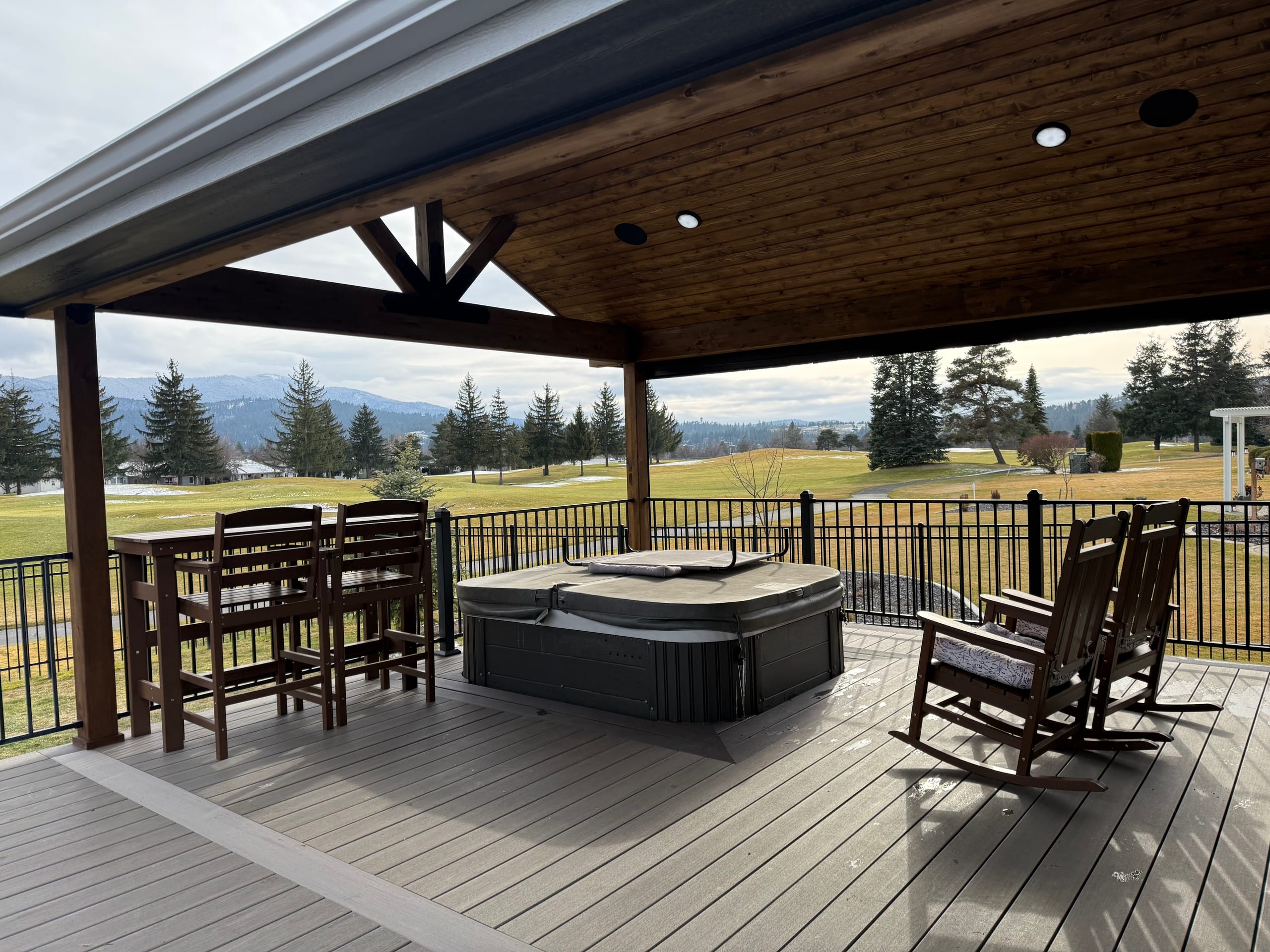
Deck Design and Consultation in Idaho Falls
Work through layout, board direction, access, shade, railings and 3D design before finalizing materials and construction scope.
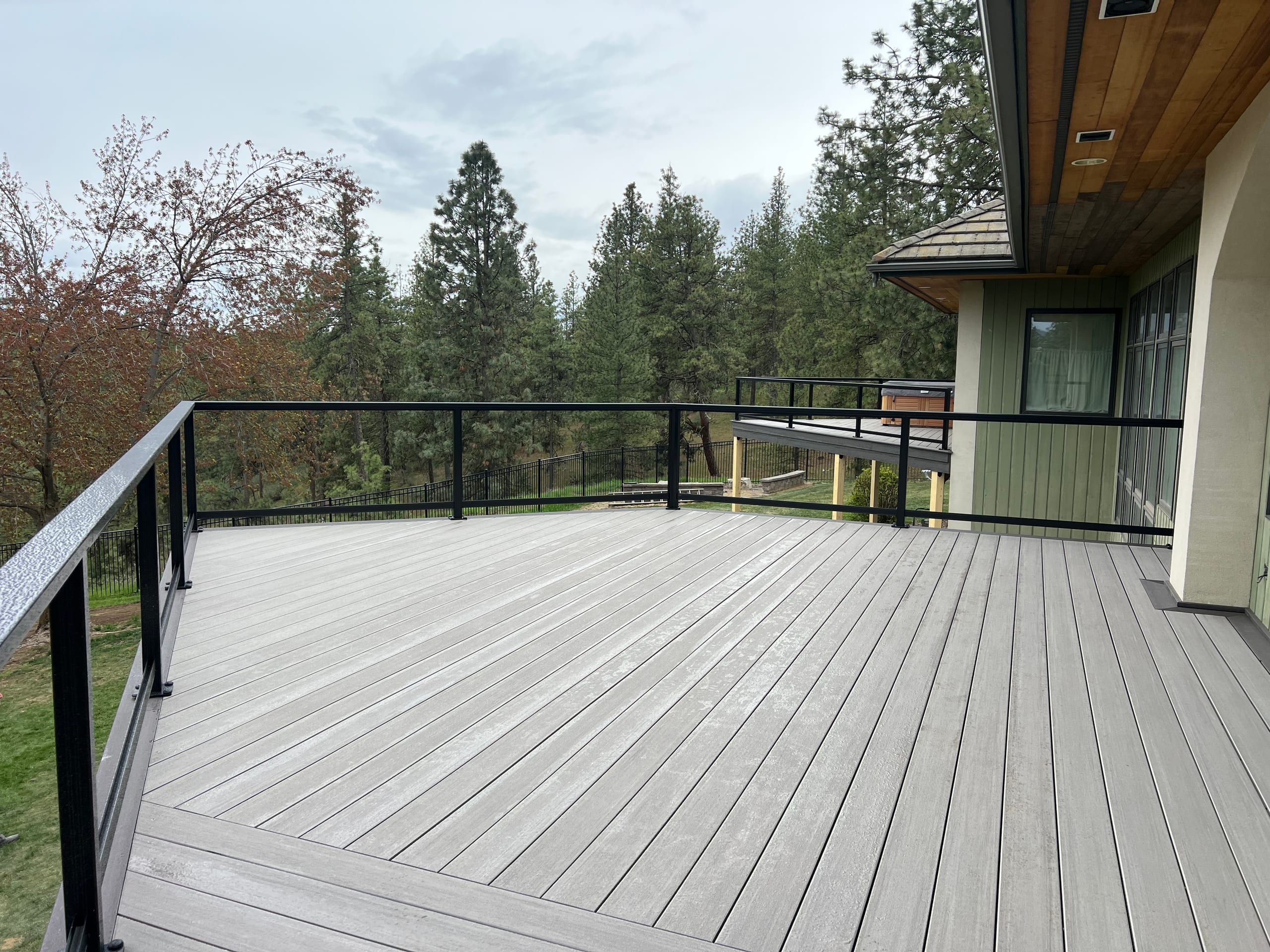
Request a PVC Decking Estimate in Idaho Falls
Tell us what draws you to PVC and how you want to use the deck. We will look at the property, compare available materials and give you a clear estimate for the work you choose.
Request a free estimate. Call Dynamic Decks Idaho Falls at (208) 274-3260.